Ice dikes
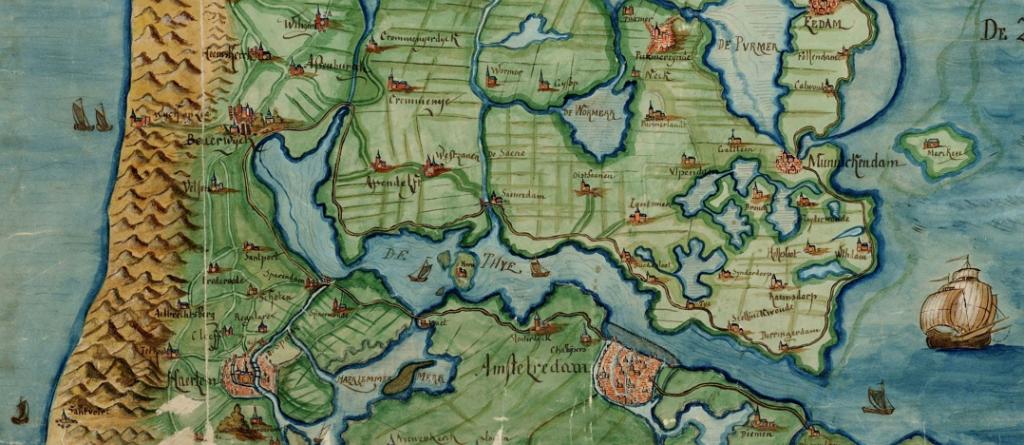
The old IJ meandered through North Holland from the Zuiderzee near Amsterdam to beyond Beverwijk. This waterway is also known as the Oer-IJ. To protect the hinterland, dikes were built: the Noorder IJ and Zeedijken. They are still there today: from Schellingwoude through Amsterdam-Noord via Zaandam to Beverwijk. Like a long ribbon through the landscape. Just a few metre and therefore always good for an extra view.
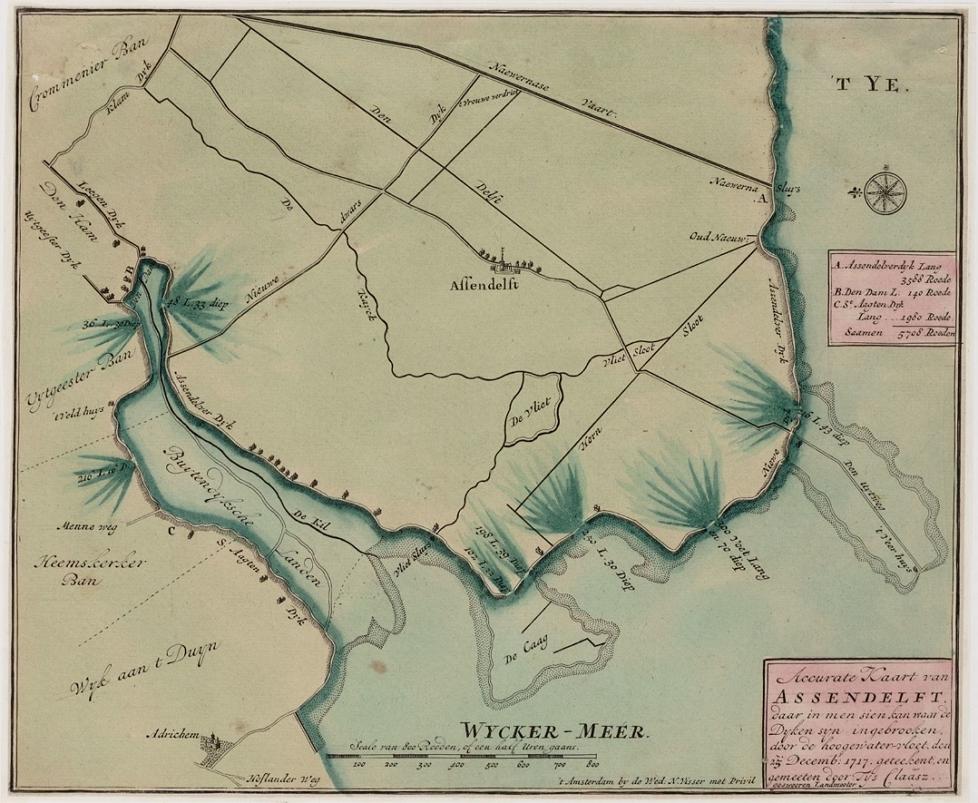
For a long time, the IJ was openly connected to the Zuiderzee, with all the dangers that entailed. During storms, the water level could rise by meters within a few hours. On Christmas Day 1717, the section near Assendelft (the Assendelverzeedijk) broke, and even basements in Alkmaar were flooded.
The situation changed when the North Sea Canal was constructed in 1876. Parts of the IJ were reclaimed. At that point, the old IJ dikes were no longer sea dikes. But you can still follow the dikes as long winding ribbons past old dike houses and through the open polder landscape. With remnants of old dike breaches everywhere. North Holland above the North Sea Canal has no less than 1,500 km of dike, equivalent to the distance between Alkmaar and Madrid.
Read the new edition of Vrienden van de Hondsbossche: Het IJ Rond (Friends of the Hondsbossche: The IJ Round); history of the old sea dikes around the IJ until the opening of the North Sea Canal in 1876 by Diederik Aten and Paul Schevenhoven.
Listen to the podcast Langs de Oevers van het Oer-IJ(Along the Banks of the Oer-IJ) .
Or experience the dikes by bike.