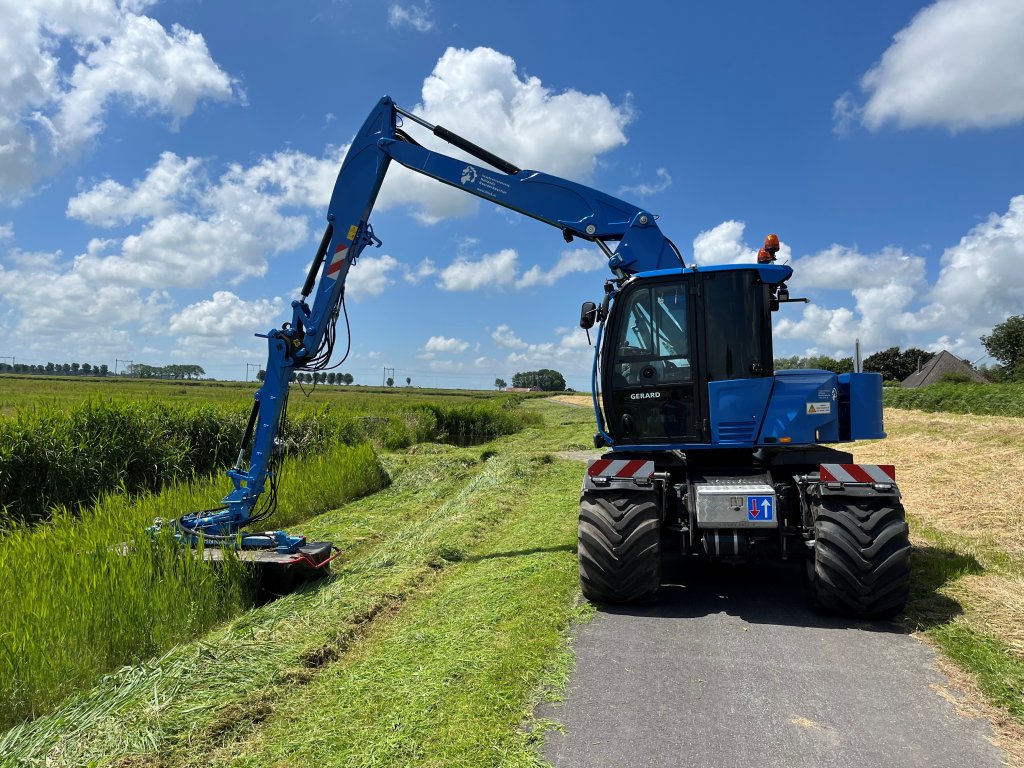
Mowing of dikes and ditches begins
We will begin mowing approximately 1,200 km of dikes on June 1. Starting June 15, we will also begin mowing the approximately 6,000 km of ditches. Mowing is necessary to maintain safe dikes and ensure proper water flow. During the work, HHNK and the contractors adhere to the code of conduct, which includes agreements and rules for maintenance. For example, we take protected animal and plant species into account. Where there is enough space, we leave as many plants as possible in the ditches because this benefits the flora, fauna, and water quality.
Water Board Member Jos Beemsterboer, responsible for Integrated Water Management in Rural Areas: “Mowing is necessary to keep our feet dry and our dikes safe. Mowing has a significant impact on the habitats of fish, birds, amphibians, and insects. That is why, for years, we have taken nature into account as much as possible during our work. Since 2025, there has been a new code of conduct for water boards. One of the measures is to leave part of the vegetation standing. All kinds of animals and insects benefit from this. In this way, we ensure healthy ditches, safe dikes, and protect nature during this necessary work.”
Mowing Dikes for Flood Control
Almost everywhere, the levees are mowed twice a year. Before mowing, ecological experts inspect the levees for nesting birds and other nests. Nests are digitally marked, and the grass is mowed around them or not at all. During the first mowing round between June 1 and July 15, half of the vegetation is left standing. Birds, amphibians, reptiles, butterflies, and other animal species can settle in the vegetation or flee there. HHNK mows the dikes for water safety. Good dike vegetation protects the dike and keeps the soil firmly bound together with the roots. Mowing also makes it easier to see where there are bare spots or other damage that needs to be repaired. That is why the entire dike is mowed in September, prior to the storm season. This allows us to thoroughly inspect the dikes for damage before the storm season begins.
Mowing ditches
HHNK mows the ditches and canals to ensure sufficient and healthy surface water, not for recreational purposes. Aquatic plants are important for water quality. They help stabilize the soil, absorb light and nutrients, and provide shelter for animals. The greater the variety of aquatic plants, the better the water quality. However, too many aquatic plants can obstruct water flow. As a result, water cannot drain properly during wet periods or flow in during dry periods. The first mowing round takes place from mid-June to August 1. Generally, about 25% of the aquatic plants are left standing on one side of the ditch. This is because animals hide among the aquatic plants, and we want to disturb them as little as possible. The second mowing round takes place in September/October. At that time, we mow the other side of the ditch only in locations where it is necessary for water flow. Because Hollands Noorderkwartier is a large area, it is difficult to say in advance when and where mowing will take place. A tip for homeowners with a small pump in the ditch is to remove it from the water or mark it with a stake so the operator can take this into account.
Fish-friendly mowing
During mowing operations, we do our best to give fish a chance to escape. The boat’s mowing basket has extra-wide mesh. If the water temperature is too high, we do not mow because this can quickly cause the fish to suffer from oxygen deprivation. Fish may gasp for air or become temporarily paralyzed. Usually, the fish recover and swim away. If you do see (dead) fish on the water’s surface after mowing operations, please call the water board at 072 582 8282. We will then investigate the situation on-site and remove any dead fish. For more information about mowing operations, see the Mowing page.