
New dredged material storage site in Zaanstad

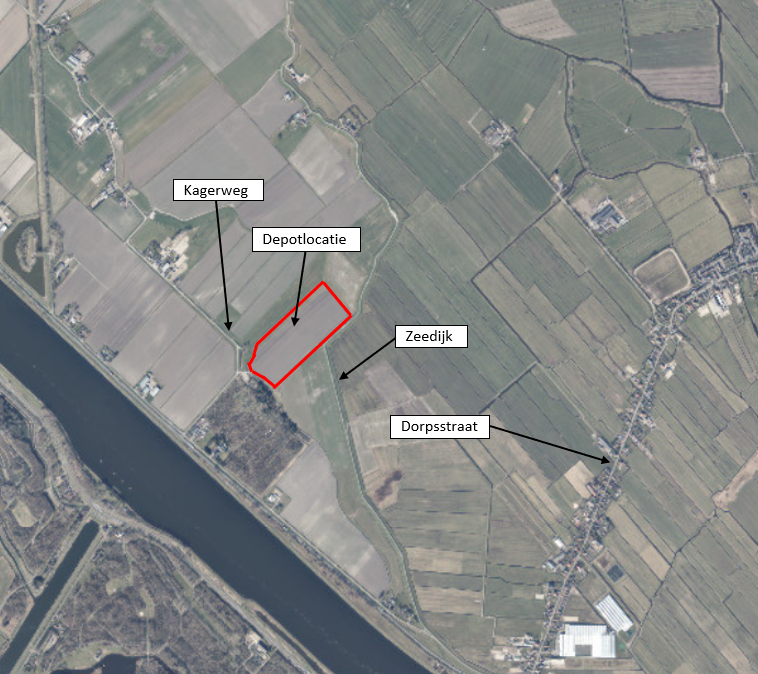
In April 2026, HHNK and the municipality of Zaanstad purchased a plot of land for a new dredged material depot. Dredging waterways in urban areas requires a disposal site (depot) to receive the dredged material. After drying and screening, the dredged material in this depot is transported away and reused as fill material. The site is a 9.5-hectare plot located between Kagerweg and Zeedijk in Assendelft. This location was chosen because it is large enough and easily accessible. Additionally, this location causes minimal disruption to the surrounding area.
Next steps

The next step after the summer of 2026 will be to apply for the necessary permits and complete the public review process. The storage facility will then be set up and put into operation for the (postponed) dredging work in the municipality of Zaanstad.

Frequently asked questions

Why is dredging necessary?

Dredging is the removal of a layer of sediment (dredged material) from the bottom of a waterway, such as a ditch or a body of water like a lake. The purpose of dredging is to:

  • Maintain the inflow and outflow capacity of waterways;
  • To maintain and, where possible, improve water quality and the life in and around the water.

For more information, see the page " What is dredging?"

Why is a new dredged material storage site needed in the municipality of Zaanstad?

Since 2016, HHNK has been responsible for the management and maintenance of a larger portion of the urban surface water in the municipality of Zaanstad. A disposal site (depot) is required for the dredged material. Until 2018, all dredged material from Zaanstad could be transported to Afvalzorg’s Nauerna site. After 2018, only contaminated dredged material was transported to Afvalzorg’s Middenmeer site. Until two years ago, a solution for disposing of reusable dredged material was always found in other municipalities. Given the large quantities of dredged material generated in Zaanstad, this is no longer possible. As a result, dredging operations have been postponed. Since 2016, the municipality of Zaanstad has been searching for a suitable storage site for the reusable dredged material. This was a complex undertaking that has been completed with the purchase of this parcel of land.

What does the depot look like in the surrounding area?

The final design for the storage site has yet to be finalized. The basic layout includes an access gate, a turning area made of Stelcon slabs, a dumping platform (or platforms) with access paths leading to it, and storage bays bordered by embankments approximately 1.50 metre , within which the dredged material will be stored. The site is enclosed by existing ditches and, to a small extent, by a fence. In addition, we are exploring the possibility of creating nature-friendly banks along part of the ditches and seeding the embankments to give them a natural appearance.

What happens to the dredged material at the storage site?

At the depot, the dredged material is turned over using cranes to facilitate the drying process, and it is screened to remove debris. After inspection, the final product is soil that is reused, for example, to reinforce flood defenses (dikes). 

Is the quality of the dredged material tested before it is sent to the storage site?

Yes, before dredging begins, the dredged material is tested for contaminants through a waterbed survey. Contaminants are always measured in both dredged material and soil. The level of contamination determines whether the dredged material may be spread or used in the environment or whether it must be transported to a landfill. The dredged material received at the depot in Zaanstad can be reused as soil after drying. Contaminated dredged material is disposed of under controlled conditions at Afvalzorg’s specially equipped landfill site in Middenmeer.

How does the community around the dredging depot notice the impact?

The delivery and removal of (dried) dredged material is carried out using trucks and tractors with dump trucks. Dredging work mainly takes place from September through April. We expect there to be approximately 900 transport trips per year. The turning and screening of the dredged material takes place for a few weeks each year. These activities generate noise. There are maximum noise standards for this, which we remain below. In the coming years, we will increasingly use electric equipment, which will reduce the noise level. Odor is minimal, occurring only at close range (within the depot) during unloading.

Does the dredged material storage site have a negative impact on the water quality of the surrounding ditches?

That is unlikely given the quality of the dredged material being processed at the disposal site. To be on the safe side, we periodically sample the groundwater around the dredged material disposal site to monitor water quality and—if necessary—take appropriate measures.