New water storage facility makes Sammerspolder more climate-resilient
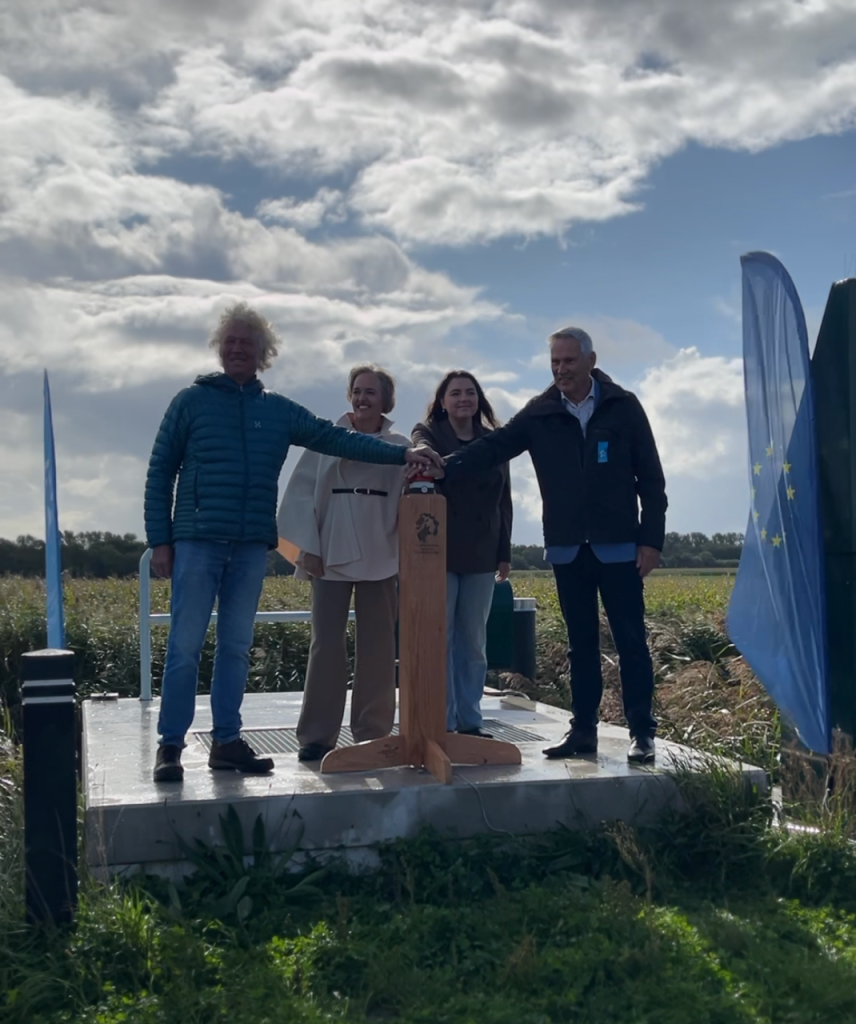
Wednesday, September 16, marked a milestone for the Sammerspolder: the water storage facility was officially completed. Due to the effects of climate change, additional space is needed to temporarily store excess rainwater at times. With the push of a button, Provincial Executive Member Anouk Gielen (Province of North Holland), Councilwoman Yvonne Roos (Municipality of Bergen), landowner Klaas Valkering, and Water Board Member Jos Beemsterboer opened the weir gate, allowing water to flow into the storage facility. With this symbolic act, the water storage facility is now ready to temporarily store excess water during wet periods.
Flooding
During the flooding in June 2021, when more than 140 mm of rain fell in two days, the vulnerability of the area on the west side of Alkmaar became apparent. This area covers approximately 5,000 hectares (more than 7,100 soccer fields) and lies in a basin between the dunes and the higher-lying parts of Bergen and Heiloo. This area is the most remote in terms of drainage to the open water. Following the June 2021 flooding, our goal was to increase the resilience of the drainage system here to reduce the vulnerability of the water system. The new water storage facility benefits the Sammerpolder and the polders on the west side of Alkmaar that discharge into this drainage basin—the main network of ditches. During flooding, the polder pumping stations can continue operating longer because the water level required to stop pumping is reached more slowly.
Water Storage on Bulb Fields
Following the 2021 flooding, landowners in the Sammerspolder expressed their willingness to contribute to a solution. They made 12 hectares of (bulb) farmland—roughly 18 soccer fields—available to the water board. Jos Beemsterboer, executive director at HHNK: “In 2023, an agreement was signed, marking the first step toward the construction of the Sammerspolder Water Storage Area. Just like the Bergen Airport Water Storage Area, this facility can be used to store water for both the polder and the drainage basin. The other adjacent polder pumping stations can continue to operate without interruption. When the area is not being used for water storage, it serves as grassland. In the ‘ programme Water Challenge 2,’ we are working on preparations to improve water inflow and increase storage capacity at thirty other water storage areas.”
Protection from Water
The water board protects North Holland, located north of the North Sea Canal, from flooding. Due to climate change, extreme rainstorms are becoming more frequent. This can cause water levels to rise significantly, increasing the risk of the drainage dikes overflowing. Retention basins can temporarily absorb the excess water, allowing the pumping stations to continue operating and keeping water levels under control. This makes the area less vulnerable to flooding.