Deltares research does not reveal origin of dinoterb
The Deltares knowledge institute has not found a source for the substance dinoterb found in the HHNK area. No evidence has been found that the substance is still in use. The data analysis also shows no clear errors in the data. This is the conclusion reached by the independent knowledge institute based on thorough research into possible explanations and sources for the substance, which was conducted by the institute. Deltares recommends investigating three further possibilities. HHNK will act on these recommendations and remain fully committed to water quality.
In its report, Deltares makes the following recommendations:
- Investigate whether dinoterb that may have been stored in the waterbed in the past is released due to disturbance;
- Taking samples to determine whether dinoterb from possible industrial or human use is entering the sewage treatment plant;
- Additional analysis as soon as dinoterb is detected in regular measurements, in order to rule out possible variations in future measurements.
HHNK will implement these recommendations and remain fully committed to improving water quality.
Jos Beemsterboer, portfolio holder for integrated water management in rural areas at HHNK: "The presence of a banned substance such as dinoterb, years after the substance is no longer used, once again highlights how important it is to continue working with all parties on water quality. This is a joint task. As far as we are concerned, the starting point must be: what does not go in does not have to come out. HHNK will continue to implement the Water Framework Directive (WFD) and focus on source control, pollution prevention, and reduction. In addition, an extra boost for water quality is in preparation. HHNK will emphatically call on parties to fulfill their role in this regard.
Significant boost to clean water
HHNK's ambition is that by 2027, all water in its management area will be clean and healthy and will meet the WFD standards. This is a considerable challenge and not entirely feasible. It is highly dependent on factors such as nutrient levels, with the natural substances nitrogen and phosphorus. The historical pollution of the soil also plays a role in achieving the targets. Since 2009, HHNK has been working hard on the joint WFD task of improving water quality. This includes minimizing the impact of agriculture and other human activities on the water and promoting fish migration. Over the past two years, there has been a growing political and social awareness that more needs to be done to achieve the WFD targets by 2027. HHNK is therefore preparing an additional package of measures. Key elements of these measures include reducing emissions, updating the sources of substances such as nitrogen and phosphorus, reducing indirect discharges, and, of course, deploying its own instruments.
About the study
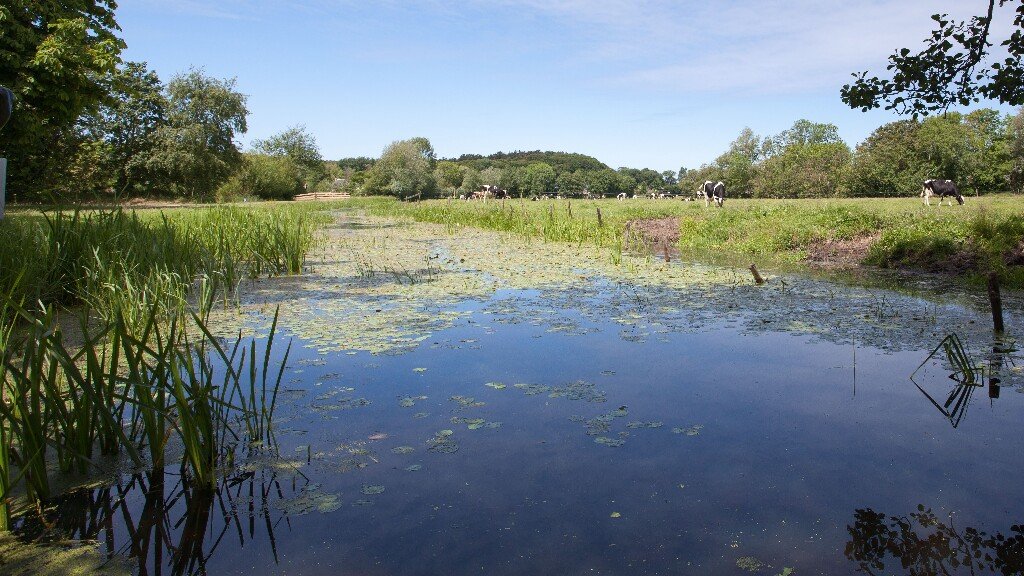
The study was commissioned by HHNK and conducted by the renowned independent research and knowledge institute Deltares. The reason for this study was that measurements by HHNK showed that dinoterb, a substance banned since 1998, had been found in surface water at various locations. The study included literature research, interviews with stakeholders and experts, mapping of possible distribution routes, and analysis of existing dinoterb data. Various organizations contributed their knowledge, including Wageningen Environmental Research, RIVM, Ctgb, CML – Leiden University, and the Human Environment and Transport Inspectorate. The report was reviewed by an external sounding board group consisting of RIVM, ILT, and CML.
Full report available
You can download the full research report at the bottom of this page.
About HHNK
HHNK is responsible for regional surface water and sewage treatment in terms of water quality. In addition, HHNK works every day to protect the land against water, flooding, and water shortages, to ensure clean and healthy surface water, and to maintain safe roads and waterways. We do this in North Holland above the North Sea Canal: Hollands Noorderkwartier. More information about the approach to clean and healthy water can be found at www.hhnk.nl/gezond-water
See also
- Read aloud Source research dinoterb (Deltares report) with ReadSpeaker docReader
- Read aloud Infographic Quality Management System with ReadSpeaker docReader
- Read aloud Infographic Quality System and Accreditation with ReadSpeaker docReader
- Read aloud Infographic Responsibilities in the crop protection product chain. with ReadSpeaker docReader