
Pressure Pipe Break
If you have any questions, please visit our FAQ page.
Live Blog Update: October 5
Water Testing Results
On October 1, the results of the surface water measurements were discussed with the advisory group. The situation as of September 30 appears more favorable than it did on September 24; in particular, the decrease in chloride, sulfate, and bacterial load stands out. We expect to be able to indicate next week whether the advisory against using the surface water can be revised.
Key findings:
- No abnormal values were found for the chemical parameters. While some values exceeded the standards, they are consistent with previous measurements in the area.
- E. coli concentrations continue to decline and are well below the bathing water standard at most locations.
- The previously elevated chloride concentrations in Landsmeer, Amsterdam (Landsmeerdijk), and Broekervaart are decreasing, indicating either dilution or a return to normal water conditions.
- The low oxygen level at the Zunderdorp monitoring station has risen from 3.2 to 4.7 mg/l; the Broek in Waterland monitoring station (N247 canal) also shows a slight improvement. At several locations, however, the oxygen level remains around or just below the desired 5 mg/l.
- The sulfate concentration at the Broek in Waterland monitoring site (N247 waterway) has decreased from 630 to 440 mg/l, but remains higher than at the other locations. This may be the result of a dip in oxygen levels, but it may also be a naturally occurring phenomenon.
Advice from the Animal Health Directorate General
HHNK shared the measurement data with GD Animal Health and sought their advice. Their response reads: “We conclude that, from a chemical standpoint, there is no significant toxicological risk of acute or chronic poisoning in cattle that drink this water. The measured concentrations of metals and PAHs are so low that residues in milk or meat are expected to remain well below market and safety limits. However, there were occasional (excessively) high sulfate levels (up to 630 mg/L) and high E. coli levels at several sampling points. These results are neither unexpected nor unusual for surface water in this area. The risk is not high, but GD’s standard recommendation would be to use cleaner water sources.”
Aeration Pumps
The aeration pump in the Waterlandsplein neighborhood has been removed. There is still an aeration pump at De Molen Garden Park, where we want to further increase the oxygen content of the water.
Garden Parks
Additional sampling at the community garden complexes has revealed locally elevated levels of ammonium, nitrogen, and phosphate. These findings indicate nutrient-rich and low-oxygen conditions, consistent with excess nutrients in the water and the decomposition of organic matter. Due to the low oxygen levels detected, additional measurements are being taken at the community garden complexes. In addition, an assessment will be conducted next week—particularly at De Molen Garden Park—to determine whether additional measures are necessary. This park is directly connected to the surrounding waterways.
Live Blog Update: September 25
Additional warning signs have been installed
Last week, on the recommendation of the Central Village Council, four additional warning signs were installed along the main roads leading out of Landelijk Noord.
Report on the Residents' Meeting on September 10
The report from the residents' meeting has been added at the bottom of this page. The first meeting with the focus group took place on September 18. The report from that meeting has been shared with the members of the focus group.
Answers to Administrative Questions Published
Following the water main break in Amsterdam-Noord, administrative questions were posed to HHNK. The questions and answers have been published at:Written Questions - iBabs Public Portal.
Live Blog Update: September 23
Water Quality Measurements in Garden Parks
The laboratory has been tasked with measuring water quality in five garden parks. Samples will be taken at the following locations on Friday, September 25: Tuinpark de Molen, Tuingroep Wijkergouw, Volkstuinpark Rust en Vreugd, Tuinpark Tuinwijck, and Tuinpark Kweeklust. The sampling will include field parameters (temperature, oxygen, pH, visibility, and conductivity), nutrients (including phosphate and nitrogen), E. coli bacteria, heavy metals, PAHs (substances released during incomplete combustion), and PFAS.
Postponement of Fall Inspection in Affected Area
Farmers, landowners, and residents who have received a letter regarding the fall inspection do not need to clean their ditches at this time. The inspection has been postponed. The affected addresses will receive a letter regarding this. As soon as the survey results are available and there is more clarity about any potential impacts on the waterbed, we will provide an update via letter.
Measurements Using a Drone Boat
Today and tomorrow, measurements will be taken using a drone boat. This unmanned vehicle measures the temperature, electrical conductivity, oxygen levels, pH, and depth of the waterways. We’re doing this to get a good picture of the entire area, not just the fixed WFD monitoring points.
Live Blog Update: September 21
Positive trend in water quality; clarity on the waterbed to follow
The situation in the area affected by the water main break in Amsterdam-Noord continues to show cautious signs of improvement. Measurements indicate that oxygen levels in the surface water have returned to normal at several locations, and no new reports of fish mortality have been received. At the same time, differences remain visible between locations within the affected area. We will therefore continue to monitor water quality closely.
Research on the riverbed continues
In addition to the existing water quality measurements, research is also being conducted on the waterbed. This research is examining whether—and to what extent—contaminants resulting from the pressure pipe rupture have entered the sediment of ditches and waterways.
Pending the results of the investigation, the advisory to avoid using surface water in the affected area remains in effect. Surface water may naturally contain contaminants, and water quality can vary due to factors such as weather conditions, bacteria, algae, or runoff. For this reason, we generally advise exercising caution when using untreated surface water. In addition, a large amount of municipal wastewater has entered the water system due to the pressure pipe rupture. For this reason, the advisory remains in effect not to use surface water in the affected area for the time being for purposes such as irrigation, recreation, or as drinking water for animals. As soon as the investigation shows that water quality has sufficiently recovered, we will provide an update via this live blog.
Postponement of Fall Inspection in Affected Area
Farmers, landowners, and residents who have received a letter regarding the fall inspection do not need to clean their ditches at this time. A postponement has been granted for the inspection. As soon as the results of the study are available and there is more clarity about any potential impacts on the aquatic environment, we will provide updates via this live blog.
Live Blog Update: September 11
Residents' Night
During the residents' meeting, there was time for questions, concerns, and sharing experiences. We've added the questions asked during the meeting to the Q&A section of this live blog.
We will provide answers to any questions that are still unanswered as soon as possible. During the evening, the initiative to form a sounding board group was discussed. We plan to schedule an initial exploratory meeting next week with the residents who have signed up for this group. The discussion will focus on future prospects, water quality, and the next steps in the process. At this time, the urgent recommendation to avoid using surface water in this area remains in effect.
The presentation given at the residents' meeting is at the bottom of this page.
Live Blog Update: September 10
Update on the Schellingwoude water main break: water quality is showing signs of improvement
The situation in the area affected by the water main break near Schellingwoude is improving. Measurements show that water quality is improving at several locations and that oxygen levels in the water are recovering. At the same time, the parties involved continue to closely monitor the situation, and monitoring is being conducted at various locations throughout the area.
Improvements are visible in the area
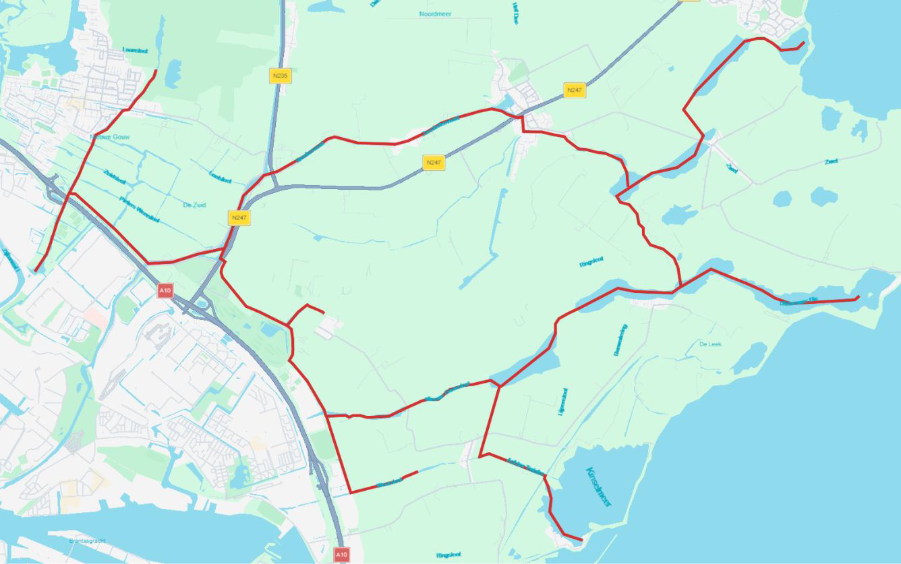
The effects of the water main break were felt in an area stretching from Amsterdam-Noord through Zunderdorp and Ransdorp toward Monnickendam and the municipality of Waterland.
Measurements over the past few days show a positive trend. Oxygen levels are recovering, and no new reports of dead fish or fish in distress have been received. The visible effects of the pollution are also diminishing. At many locations, discoloration of the water and other signs of pollution are gradually disappearing.
The recovery is not proceeding at the same pace everywhere. Due to differences in water flow and the design of the water system, local variations in water quality may persist. For this reason, the situation is assessed on a location-by-location basis.
Monitoring and Repair Work
To monitor changes in water quality, surface water is sampled and analyzed at multiple locations. In addition, measures implemented earlier—such as aeration pumps and the introduction of cleaner water—continue to contribute to the restoration of the water system.
Meanwhile, Waternet continues to work on repairing the damaged pressure pipe. Repairing a pipe of this size is technically complex and requires more time than initially anticipated. The previously mentioned period of two to three days referred to the removal of contaminated water from parts of the water system and not to the repair of the pipe itself. Furthermore, it became apparent in the first few days that both the extent of the contamination and the affected area were larger than initially assumed.
The investigation into the cause of the pipe break is also still ongoing. As soon as more information becomes available, the findings will be shared.
Live Blog Update: September 4
Update on the water main break: repair work and cleanup efforts are in full swing
Waternet is working around the clock to repair the pressure pipe break that occurred on the night of August 30. The break is in a large wastewater pressure pipe with a diameter of approximately one- metre. To ensure the continued discharge of wastewater, a detour route was immediately set up. There is currently no danger to the surrounding area from the pressure pipeline. Repairing the pipeline is a complex process and is expected to take at least two weeks. In the meantime, an investigation into the cause of the pipeline break has also been launched.
Approach and Consequences of the Breakup
The impact on water quality and aquatic life is significant. Waternet deeply regrets that the pipe break has led to fish deaths in the area. Employees from Waternet and HHNK are working daily to remove the dead fish and clean the surface water. To speed up these efforts, additional personnel and equipment have been deployed. HHNK is providing support with boats on the water, and a specialized contractor has been hired to carry out cleanup operations at multiple locations simultaneously. It is expected that, after the weekend, efforts will shift to a targeted approach to cleanup based on reports from the surrounding area.
Measures to Improve Water Quality in the Area
At the same time, measures are being taken to improve water quality. Due to recent rainfall, contaminated water has continued to flow into the area. Because oxygen levels in several ditches were already low, this has led to additional fish mortality. To increase the oxygen content in the water, the water board has installed aeration pumps at several strategic locations. Recent measurements show that water quality in parts of the affected area is now improving, although it remains insufficient at some locations.
Weather Forecast and Approach
The water system in the area consists of many small ditches and waterways, which makes the cleanup operation complex. Due to the expected strong winds and precipitation today and this weekend, the cleanup operation will be temporarily adjusted. The remaining diluted contaminated water is flowing via the Ransdorperdiep to the northeast, where it is discharged into the Markermeer south of Monnickendam. To minimize the impact on water quality and the environment, various scenarios have been developed in case of a change in weather conditions. The current discharge route will remain in use for as long as possible. In addition, extra pumps will be deployed to supply cleaner water and further dilute the contaminated water.
In light of recent developments, we strongly advise against using surface water in this area. We are closely monitoring the situation, and the parties involved are prepared to take additional measures if necessary.
Original post, September 1
Effects of Water Main Break Noticeable in Water Quality in Amsterdam-Noord
Around 2:00 a.m. on Saturday night, a Waternet wastewater pressure pipe burst near Schellingwoude. Due to the rupture of this pipe, which had a diameter of metre , a large amount of sewage flowed into our area. In particular, the oxygen level in the water dropped sharply, resulting in, among other things, fish mortality.
How does this affect us?
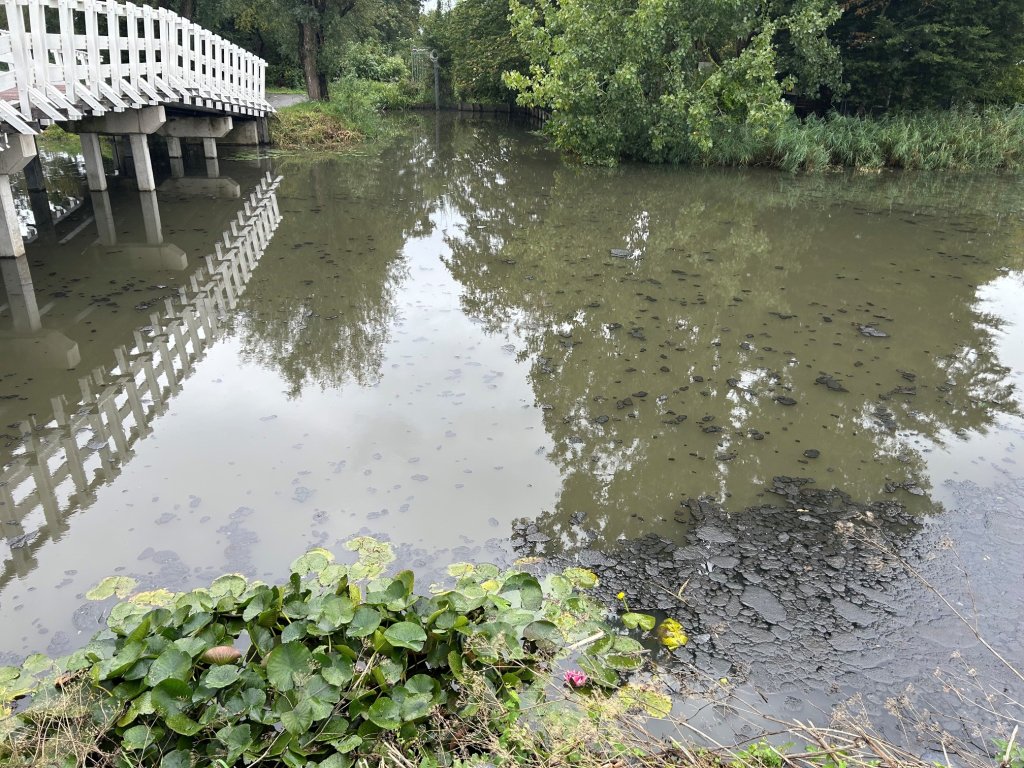
We see grey water with brown/black flakes floating on the surface. These flakes come from the bottom of the ditches. Unfortunately, the declining oxygen level is causing increasing fish mortality; that, too, is visible. The water was already relatively warm, and warm water contains less oxygen. Rainwater cools the water down, but it contains no oxygen of its own. In addition, a faint sewage odor is detectable.
What are we doing about it?
To remove the contaminated water from our area as quickly as possible, it was decided on Sunday—in consultation with Rijkswaterstaat—to activate the De Poel pumping station near Monnickendam to divert the water via the Kadoelen pumping station to the North Sea Canal. By late afternoon, our staff on site observed that the flow was proceeding as planned, that the effects on the fish were visible, but that it would still take two to three days for the water to be discharged via the North Sea Canal.
In consultation with the municipality and Waternet, the recommendation is not to use the water. We are sampling the ditch water in Amsterdam Noord and the surrounding rural areas at various locations several times a day.
Adjusting the Approach Due to Precipitation
The rain that fell Sunday night and Monday morning meant that the De Poel pumping station had to be turned back on to prevent flooding. As a result, the sewage has been further diluted, but it is also being dispersed farther north (Zunderdorp, Ransdorp). We continue to monitor water quality by taking samples at various locations in the area.
- Read the response to the urgent letter and open letter dated September 17, 2026, with ReadSpeaker docReader
- Read the report on the residents' meeting held on September 10, 2026, using ReadSpeaker docReader
- Read aloud the presentation for the residents' meeting on September 10, 2026, using ReadSpeaker docReader