Crayfish
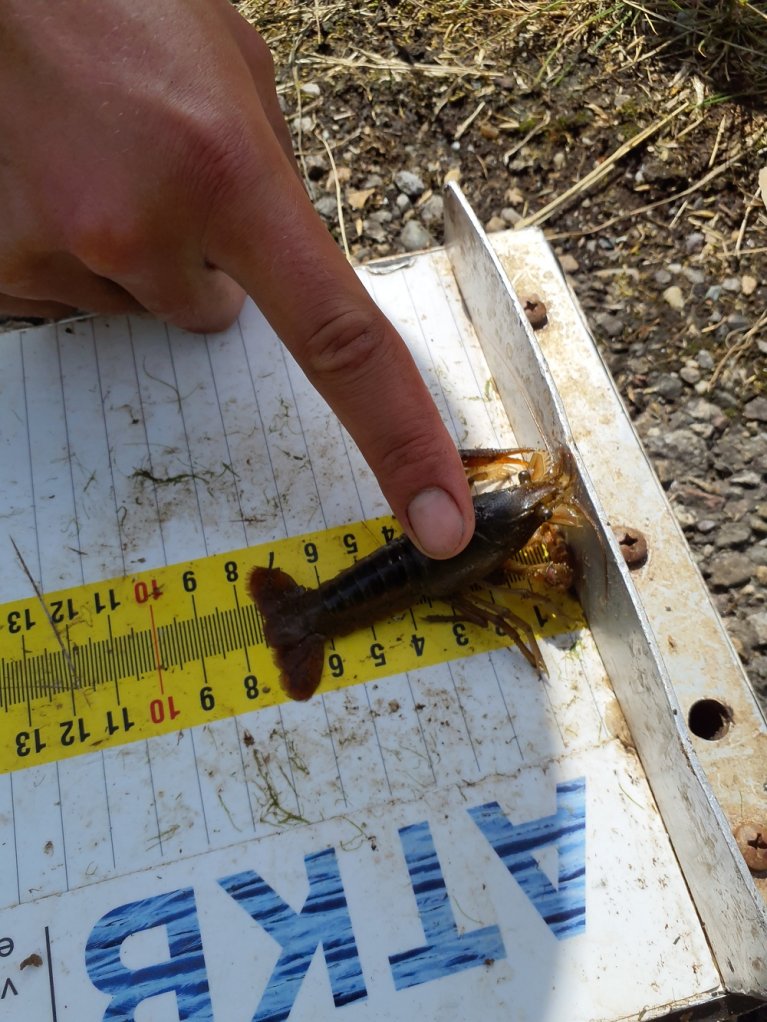
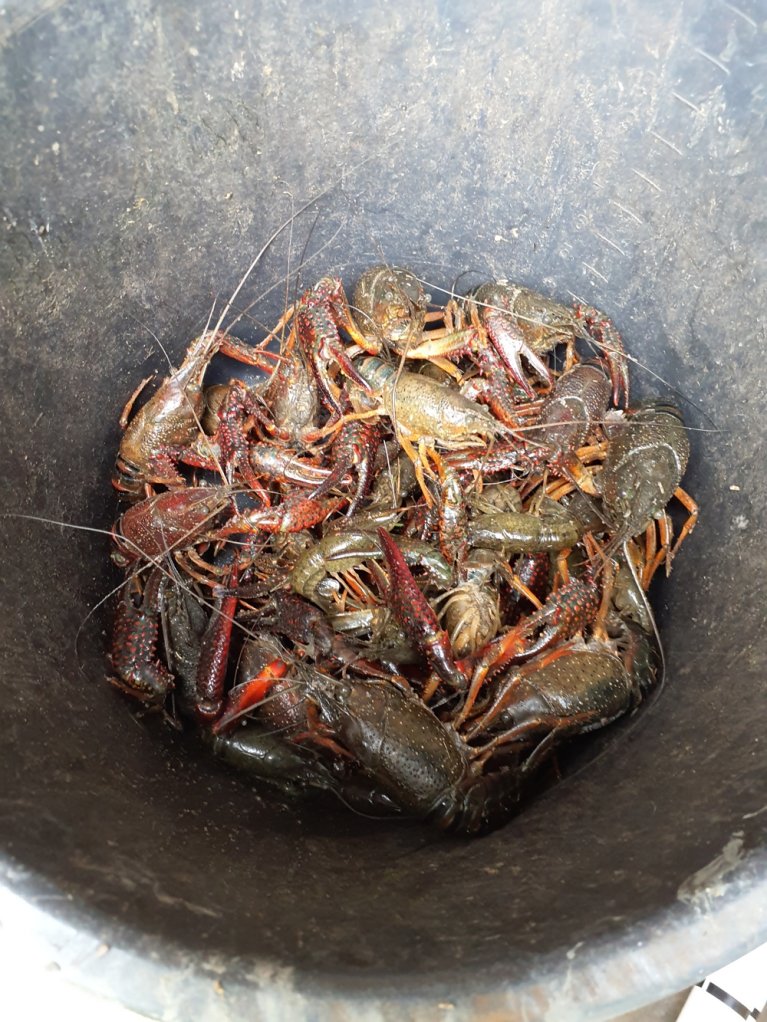
There are an increasing number of American crayfish in the Netherlands. In our management area, there are four species: the spotted, striped, tuberculate, and red American crayfish. The American crayfish is an invasive alien species. This means that it does not occur naturally in the Netherlands but can thrive here. The crayfish reproduce rapidly. They also have almost no natural predators in our waters. As a result, their numbers are increasing rapidly.
Damage
Red swamp crayfish dig burrows and tunnels in waterbeds and banks. Sometimes they also dig into dikes. Their digging can cause banks to crumble or collapse. The crayfish also eat aquatic plants or cut them up. This causes silt from the bottom to enter the water, reducing the amount of sunlight reaching the water and increasing the chance for algae to develop. This makes it more difficult for other and new aquatic plants to grow. Ultimately, this is detrimental to biodiversity.
Eradication or control?
HHNK is not currently controlling the crayfish population. The control and management of American crayfish is the responsibility of the Ministry of Agriculture, Fisheries, Food Security, and Nature (LVVN). Effective control requires, above all, national coordination, legal authorisation structural funding. The water boards want the ministry to proceed with the active trapping of these invasive species. This would allow the explosively growing population to be reduced to a manageable size, especially in areas where they cause significant nuisance.
HHNK continues to monitor the various studies and pilot projects aimed at finding a successful approach. However, a solution has not yet been found. An increasing number of native species, such as the blue heron, grebe, perch, and zander, are preying on the crayfish. This does not seem to be doing enough to reduce their numbers.
What does HHNK do?
In 2025, HHNK began monitoring to better map the distribution and population densities of American crayfish. Our entire management area will be monitored over a three-year period (2025 through 2027). We conduct monitoring in accordance with national guidelines at the same locations where we perform vegetation surveys, both within and outside WFD water bodies.
In 2025, the number of crayfish at the various monitoring sites ranged from 1 to 88, except at locations where no crayfish were found. On average, 13 crayfish were found per monitoring site. In general, we have not (yet) found any American crayfish at the highly brackish sites.
In addition to crayfish, several (invasive) exotic species occur within the HHNK management area. We have seen an increase in these species in recent years. See the page on invasive exotic species.
Catching
You cannot simply catch crayfish. Currently (2021), only professional fishermen with special authorisation are allowed to catch and sell exotic authorisation using traps or crayfish pots. Recreational fishermen are only allowed to fish for crayfish with a rod and line. Only if the fishing club has full fishing rights are they allowed to take them with them. Use a bucket that can be securely closed so that the animals are not accidentally spread. It is prohibited to release crayfish into water other than where they were caught. Crayfish lay hundreds of eggs at a time, so moving a single crayfish can create a new population.
Report
If you’ve spotted crayfish anywhere, please report it via the Waarneming.nl website at . Please include a clear photo so we can identify the species.
More information
Are you curious about what species you have seen? Take a look at the search card from Stichting EIS or the more comprehensive species finder from Naturalis.
More information about crayfish can be found on the websites of the Crayfish Knowledge Platform, the EIS Foundation, STOWA (Foundation for Applied Water Management Research), or the Province of North Holland.