Rock wool blocks
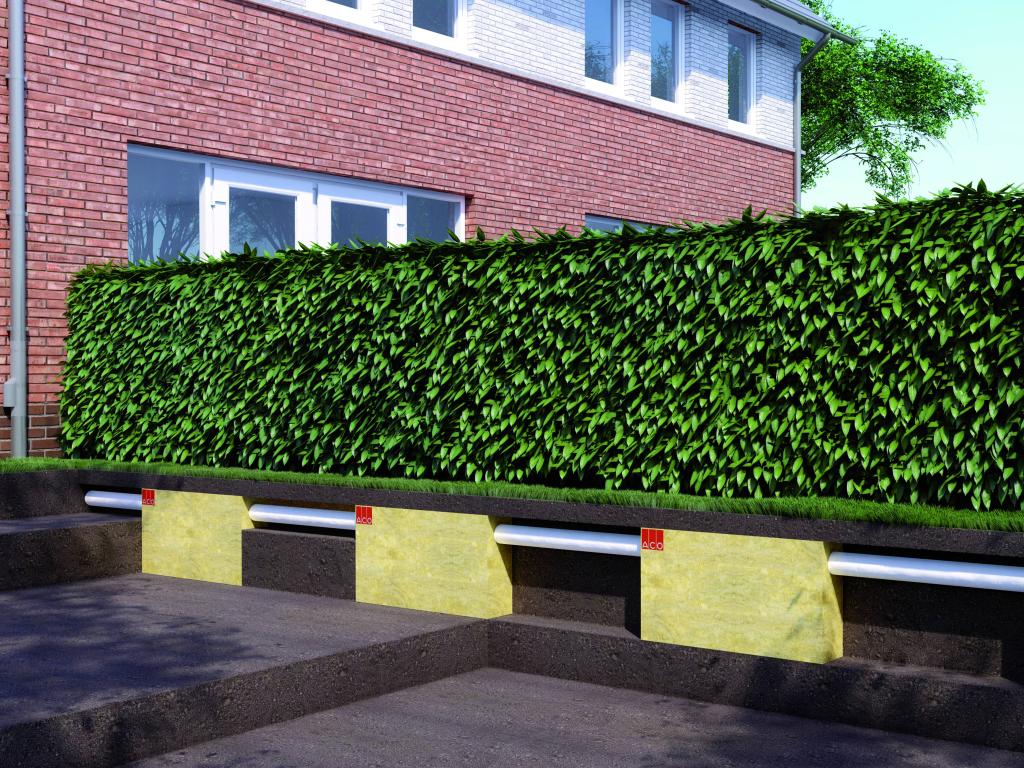
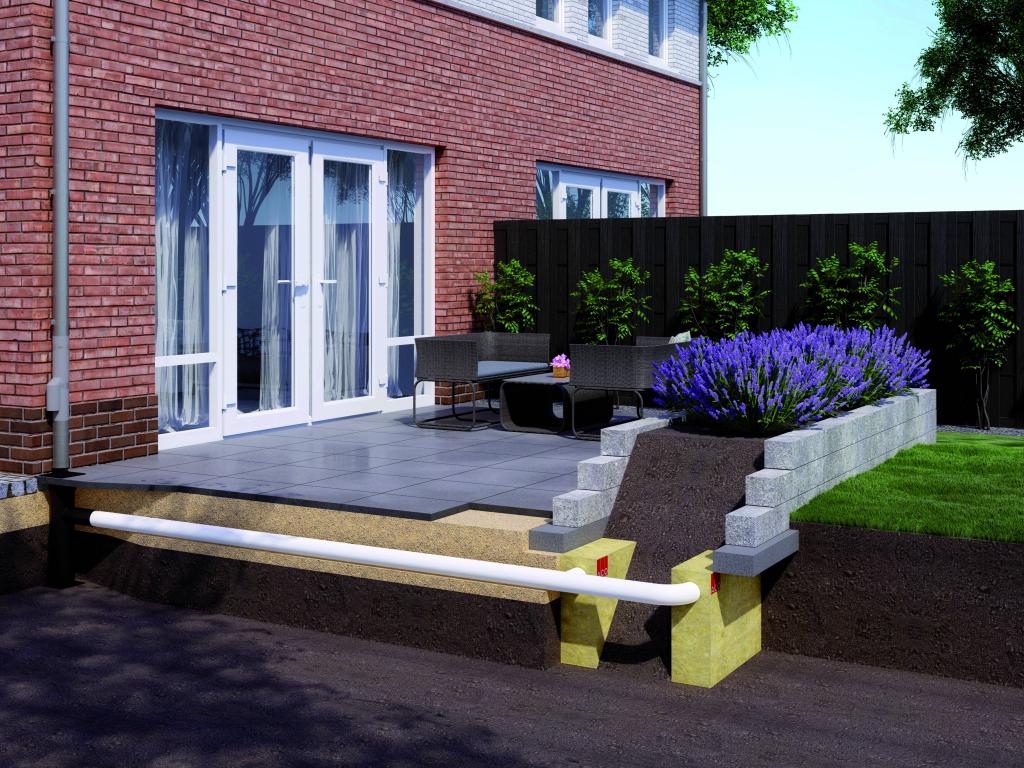
Rock wool blocks can be used to easily create a large underground water buffer. Multiple elements can be combined in series to form a larger system. A sand trap keeps the system clean. For high groundwater levels, lower blocks are also available. Rock wool is a natural material that can buffer large amounts of rainwater and release it evenly into the ground.
Stone wool-based water management systems are a sustainable solution to flooding caused by extreme rainfall in urban areas.
The system consists of thin (standard element 100 x 120 x 15 cm), lightweight (less than 20 kg) rock wool elements that absorb rainwater and then infiltrate it into the soil layer in controlled doses or discharge it into the sewer system. Rock wool elements can absorb 95% of their volume in water in a very short time and have a throughput rate of 200 metre day. In other words: One cubic metre of metre can absorb 950 litre in 8 to 10 minutes.
In the event of extreme rainfall, the water is buffered quickly and effectively. Once saturated, the rock wool element can gradually allow the water to infiltrate into the ground or drain into the sewer system over a period of 24 hours.
Rock wool is also a natural material (made from natural rock) that is produced in a sustainable manner. Rock wool is 100% recyclable.
Costs
A basic set consisting of a sand trap and four rock wool blocks with a capacity of 0.5 m³ costs around €500, and each additional element costs around €80.
Use of space
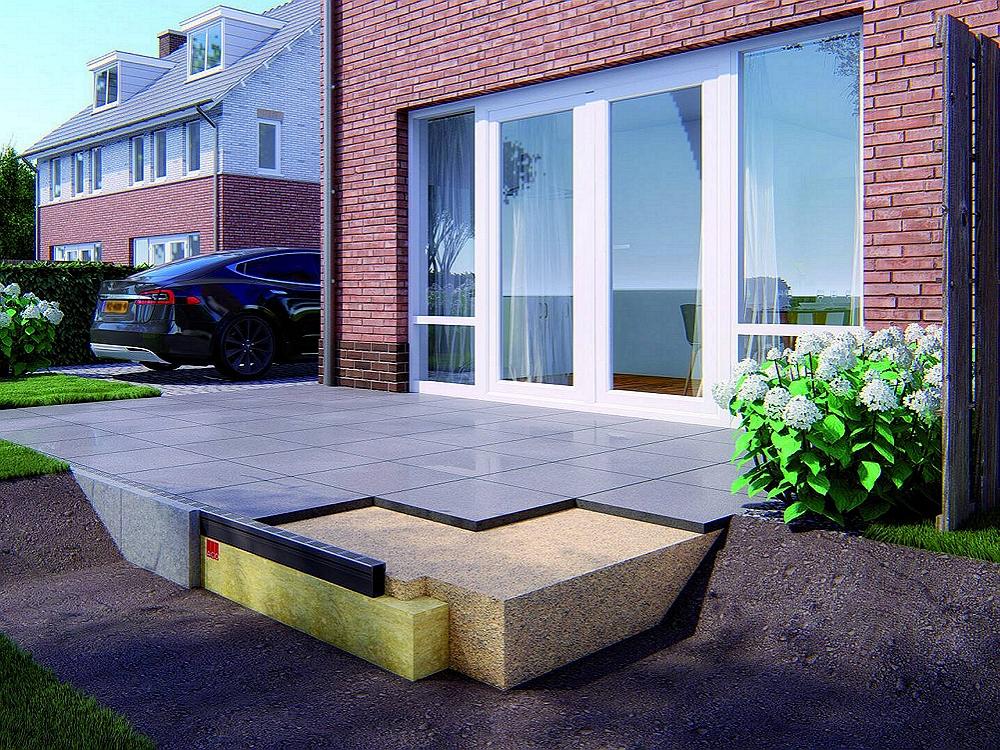
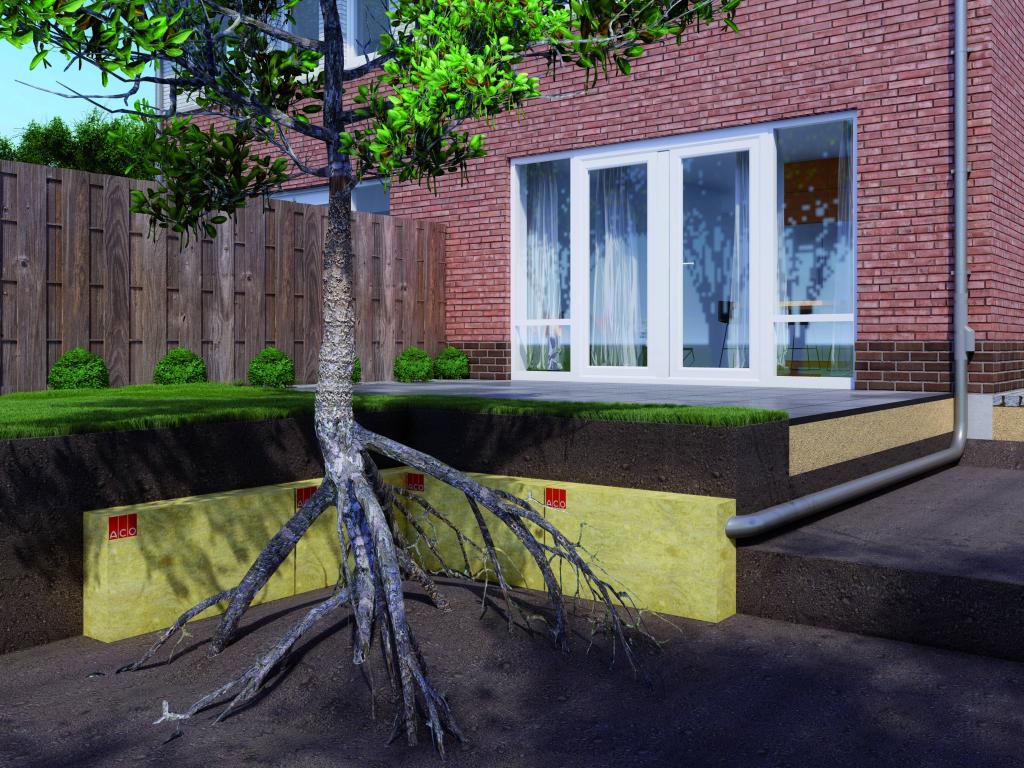
Rock wool blocks have a hollow space percentage of 95%. The blocks also have a high load-bearing capacity. Their narrow width makes them easy to install under a border, lawn, or tree, allowing water to infiltrate where the garden needs it. This makes the space multifunctional.
Difficulty
Easy to install yourself. Remember to use a sand trap.
Earthmoving
The rock wool blocks should be placed approximately 40 cm below ground level. This requires a significant amount of earthmoving. Any soil that is no longer needed can be removed.
Maintenance
Only clean the sand trap and leaf trap.
Climate goals
Store and infiltrate water where it benefits the garden (trees, shrubs, lawns). In other cases, it acts as a natural supplement to the groundwater. Retain water and gradually release it into the subsoil. This prevents the garden from drying out too quickly.
Points of attention
- Please note that ground coverage should preferably be 40 cm. In case of heavy loads, such as blocks under a driveway, 50 cm coverage should be maintained.
- Place the rock wool blocks approximately half a metre the average groundwater level.
- Create an overflow to the garden. This will prevent excess water from causing problems.
- Use a leaf and sand trap to prevent clogging. A leaf trap can also serve as an overflow in extreme cases.
- Stay approximately 2 metre from the foundation and trees.
- If infiltration capacity is poor, lay drainage sand around the blocks.