Update on the water main break: repair work and cleanup efforts
Update September 4
Update on the water main break: repair work and cleanup efforts are in full swing
Waternet is working around the clock to repair the pressure pipe break that occurred on the night of August 30. The break is in a large wastewater pressure pipe with a diameter of approximately one- metre. To ensure the continued discharge of wastewater, a detour route was immediately set up. There is currently no danger to the surrounding area from the pressure pipeline. Repairing the pipeline is a complex process and is expected to take at least two weeks. In the meantime, an investigation into the cause of the pipeline break has also been launched.
Approach and Consequences of the Breakup
The impact on water quality and aquatic life is significant. Waternet deeply regrets that the pipe break has led to fish deaths in the area. Employees from Waternet and HHNK are working daily to remove the dead fish and clean the surface water. To speed up these efforts, additional personnel and equipment have been deployed. HHNK is providing support with boats on the water, and a specialized contractor has been hired to carry out cleanup operations at multiple locations simultaneously. It is expected that, after the weekend, efforts will shift to a targeted approach to cleanup based on reports from the surrounding area.
Measures to Improve Water Quality in the Area
At the same time, measures are being taken to improve water quality. Due to recent rainfall, contaminated water has continued to flow into the area. Because oxygen levels in several ditches were already low, this has led to additional fish mortality. To increase the oxygen content in the water, the water board has installed aeration pumps at several strategic locations. Recent measurements show that water quality in parts of the affected area is now improving, although it remains insufficient at some locations.
Weather Forecast and Approach
The water system in the area consists of many small ditches and waterways, which makes the cleanup operation complex. Due to the expected strong winds and precipitation today and this weekend, the cleanup operation will be temporarily adjusted. The remaining diluted contaminated water is flowing via the Ransdorperdiep to the northeast, where it is discharged into the Markermeer south of Monnickendam. To minimize the impact on water quality and the environment, various scenarios have been developed in case of a change in weather conditions. The current discharge route will remain in use for as long as possible. In addition, extra pumps will be deployed to supply cleaner water and further dilute the contaminated water.
In light of recent developments, we strongly advise against using surface water in this area. We are closely monitoring the situation, and the parties involved are prepared to take additional measures if necessary.
Original post, September 1
Effects of Water Main Break Noticeable in Water Quality in Amsterdam-Noord
Around 2:00 a.m. on Saturday night, a Waternet wastewater pressure pipe burst near Schellingwoude. Due to the rupture of this pipe, which had a diameter of metre , a large amount of sewage flowed into our area. In particular, the oxygen level in the water dropped sharply, resulting in, among other things, fish mortality.
How does this affect us?
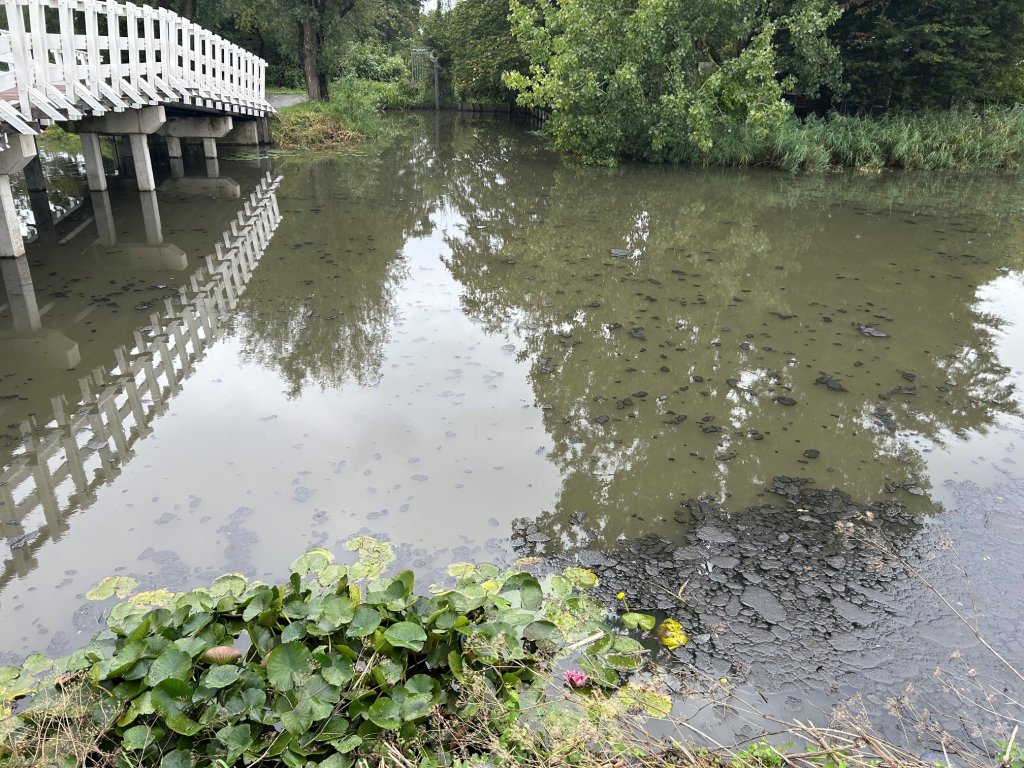
We see grey water with brown/black flakes floating on the surface. These flakes come from the bottom of the ditches. Unfortunately, the declining oxygen level is causing increasing fish mortality; that, too, is visible. The water was already relatively warm, and warm water contains less oxygen. Rainwater cools the water down, but it contains no oxygen of its own. In addition, a faint sewage odor is detectable.
What are we doing about it?
To remove the contaminated water from our area as quickly as possible, it was decided on Sunday—in consultation with Rijkswaterstaat—to activate the De Poel pumping station near Monnickendam to divert the water via the Kadoelen pumping station to the North Sea Canal. By late afternoon, our staff on site observed that the flow was proceeding as planned, that the effects on the fish were visible, but that it would still take two to three days for the water to be discharged via the North Sea Canal.
In consultation with the municipality and Waternet, the recommendation is not to use the water. We are sampling the ditch water in Amsterdam Noord and the surrounding rural areas at various locations several times a day.
Adjusting the Approach Due to Precipitation
The rain that fell Sunday night and Monday morning meant that the De Poel pumping station had to be turned back on to prevent flooding. As a result, the sewage has been further diluted, but it is also being dispersed farther north (Zunderdorp, Ransdorp). We continue to monitor water quality by taking samples at various locations in the area.