
Amsterdam years
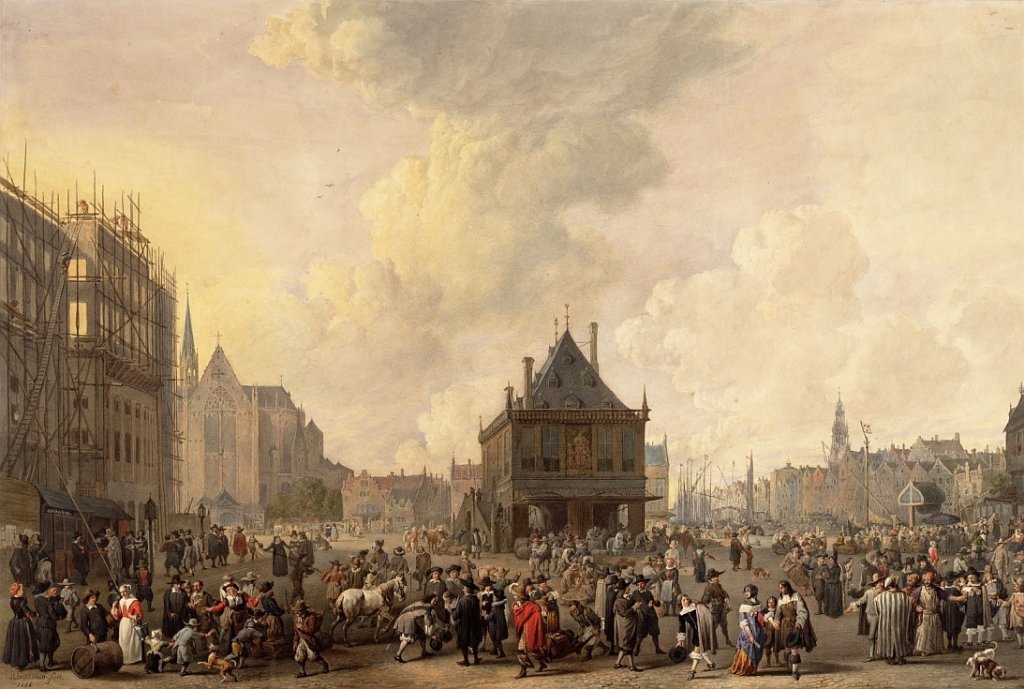
Leeghwater's move to Amsterdam in 1640 was probably related to the completion of his work on the Starnmeer. The reclamation of this lake was originally a project of the village of De Rijp, but was transferred to other hands that year. The Starnmeer was also the last lake of any size. After that, there was not much left for him to do around De Rijp. In Amsterdam, Leeghwater focused more on other jobs. He had already made a carillon for the church in De Rijp, and in Amsterdam he cast carillons for the Westerkerk and Zuiderkerk. After construction began on the new town hall in 1648—now the Royal Palace on Dam Square—Leeghwater hired himself out as a bricklayer. However, he remained active in hydraulic engineering and in July 1649, for example, he issued advice on a new drainage system through the dunes to the North Sea at Petten.