
Dynamic coastal management
When the sea is calm and the waves lap gently at the tide line, the water brings sand to the beach. And the wind blows the sand into the dunes. When the wind blows very hard and the waves crash onto the beach, sometimes whole chunks are knocked out of the first row of dunes, leaving the wind to ravage the dunes. The sand ends up back in the sea. Some of that sand washes away, some is brought back to the beach by the wind and water.
Retention of sand
The interplay of water and wind determines where the coastline ends up; without human intervention, the coast appears to be eroding. That is why, for years, various measures have been taken to retain sand in the dunes, such as rows of poles, reed screens, and, above all, marram grass. In this way, attempts have been made, with varying degrees of success, to combat erosion and maintain the coastline.
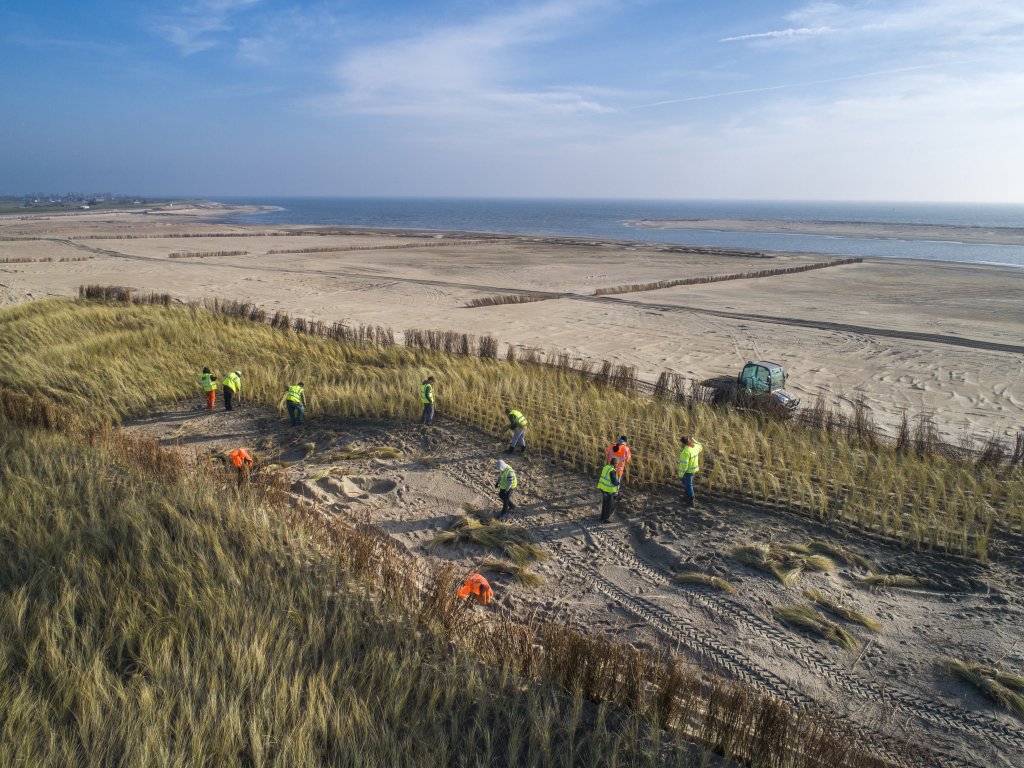
Maintaining the baseline
Since 1990, Rijkswaterstaat has been responsible for maintaining the basic coastline. This prevents the Netherlands from shrinking due to erosion. To maintain this baseline coastline, which has been updated several times since 1990, Rijkswaterstaat carries out sand replenishment. Large dredgers extract sand from the deep North Sea and spray it just in front of or onto the coast. The sand reinforces the coastal foundation, which consists of the foreshore, beach, and dunes. Some of the sand ends up in the dunes. This form of coastal maintenance has resulted in substantial dune growth in many places.
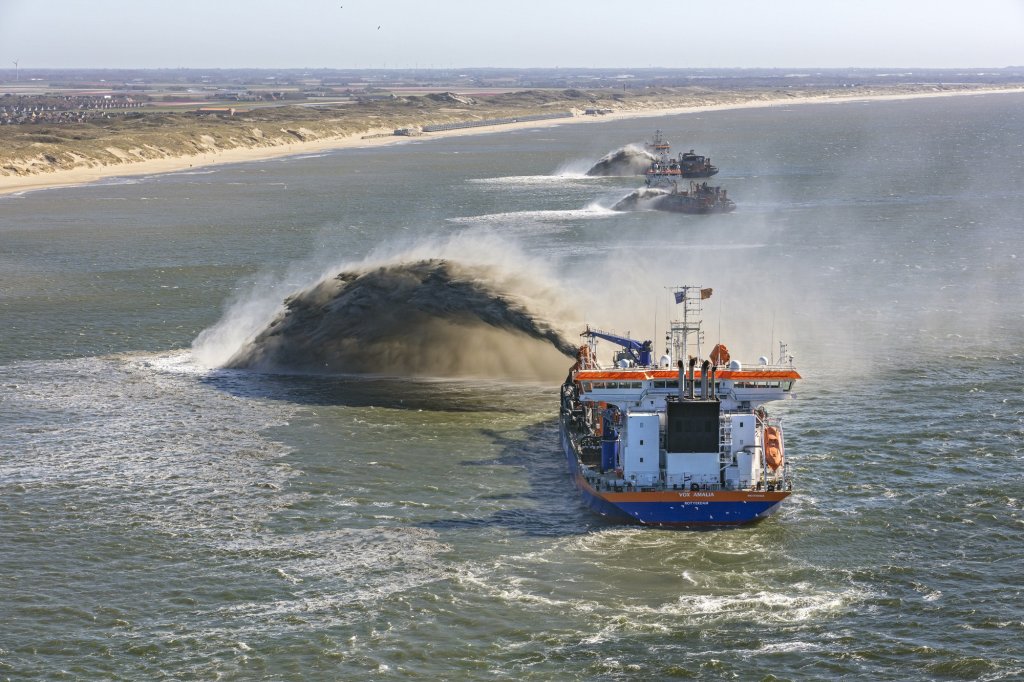
Acidified dunes
By securing the dunes with marram grass and stakes, a static first row of dunes was created over the years: the sea ridge. Then, since the 1990s, the beach sand from the sand replenishment projects has blown against it. This caused the first row of dunes to grow further towards the sea, and the sea ridge also became higher and higher. As a result, even more sand was retained. This means that hardly any sand drifts to the dunes behind it. These are also secured with marram grass, now heavily overgrown, and acidified by nitrogen. Unfortunately, the calcium-rich beach sand—which counteracts acidification—does not really end up there. This is bad for biodiversity and results in one-sided vegetation. In the meantime, all kinds of specific plants have disappeared from the dunes.
Dune erosion
If the fresh sand only remains in the sea ridge, the dune will become higher but hardly any stronger. During a heavy storm, the sand from that high, narrow row of dunes is easily blown away, and then the sand disappears back into the sea. So the dune does not grow fundamentally. And that is necessary, given the expected rise in sea level. It does not have to happen quickly, but with a little extra drifting sand, the dune will continue to grow nicely. To get the sand further into the dune for a truly more solid dune volume, with healthy soil, we need to take action. Because sea levels are rising, and we need more solid coastal defenses to cope with that.
Dynamic coastal management
Various measures have been devised to get the sand beyond the first row of dunes, the sea ridge, into the dunes. These have already been extensively tested and appear to work well. We can cap the dunes, we can create notches, and we can dig drift pits. Proportionally, these are minor interventions that give the wind more freedom. The growth of the dunes is then a natural process, in collaboration with Rijkswaterstaat, which takes care of the sand replenishment. What are these measures and how do they work?
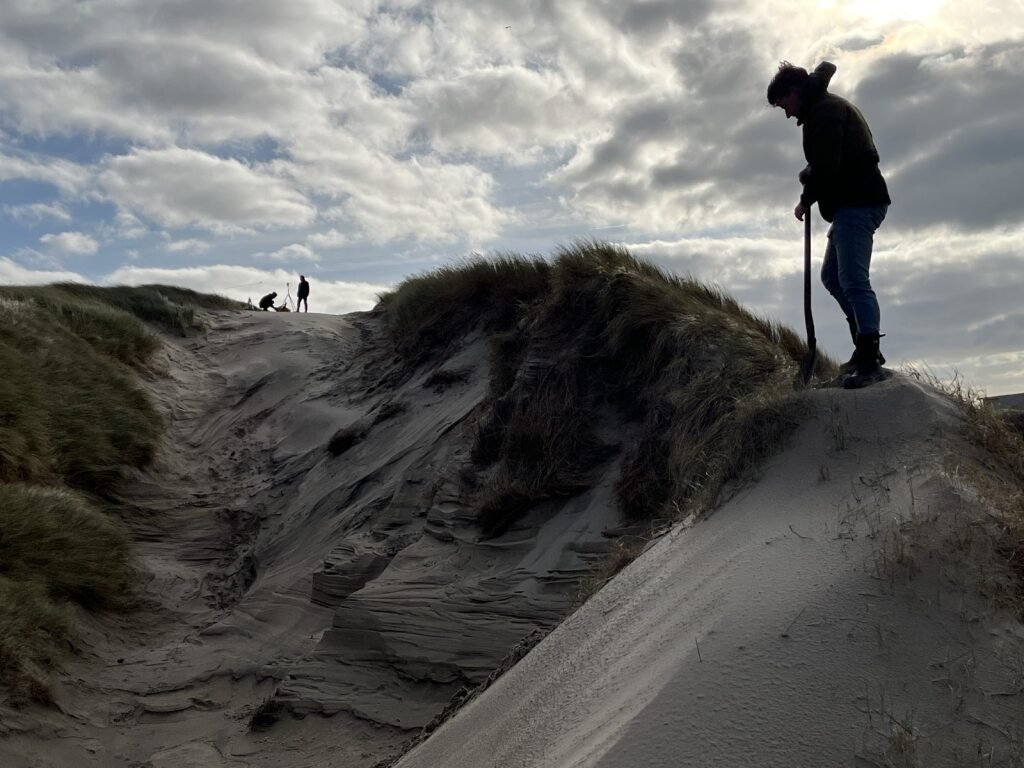
Topping dunes
If the sea ridge has become too high, preventing sand from shifting and making it vulnerable to erosion, we can excavate the upper part of the dune. This creates space for the sand to settle in the dune behind it. Of course, the first row of dunes remains high enough to withstand the sea during a storm. The excavated sand is incorporated into the inner part of the dune, thereby strengthening it.
Digging trenches
A notch is a V-shaped depression in the first row of dunes. It is wide on the beach side and pointed in the dune. This acts as a kind of funnel that carries the sand further behind the first row of dunes. The size of the notch depends on the wind direction, sand availability, and the height of the seawater during a storm. A well-functioning notch will naturally deepen until it reaches equilibrium, and with sufficient wind and sand supply, the notch will remain intact. If the notch threatens to become too deep, we take management measures: we plant marram grass or close the notch again. If the notch threatens to grow closed, we dig out a small section. The dune behind the notch can rise by up to a metre year, increasing the volume of the dune and strengthening the water barrier. This management is carried out by the local license holder.
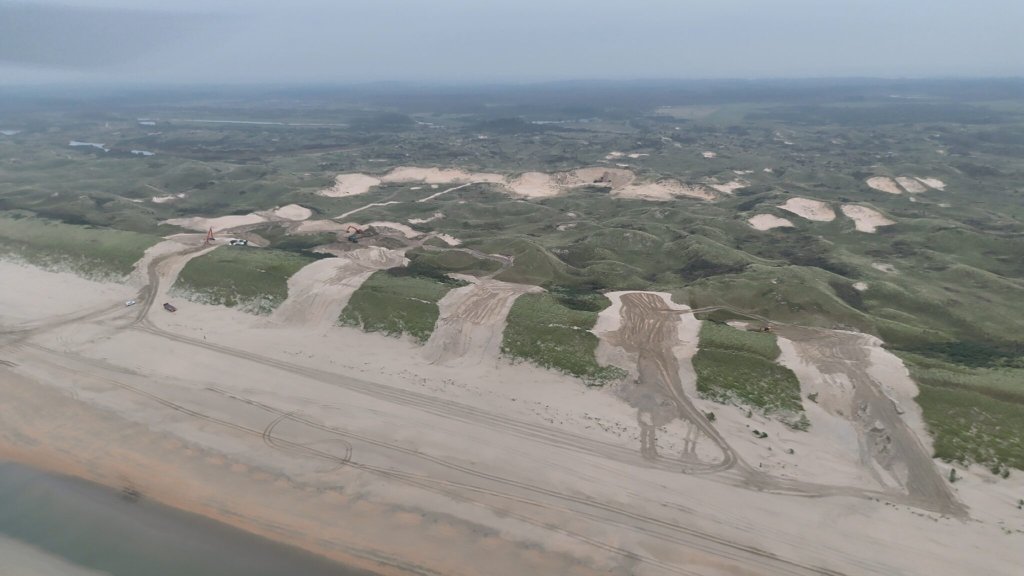
Dune hollows
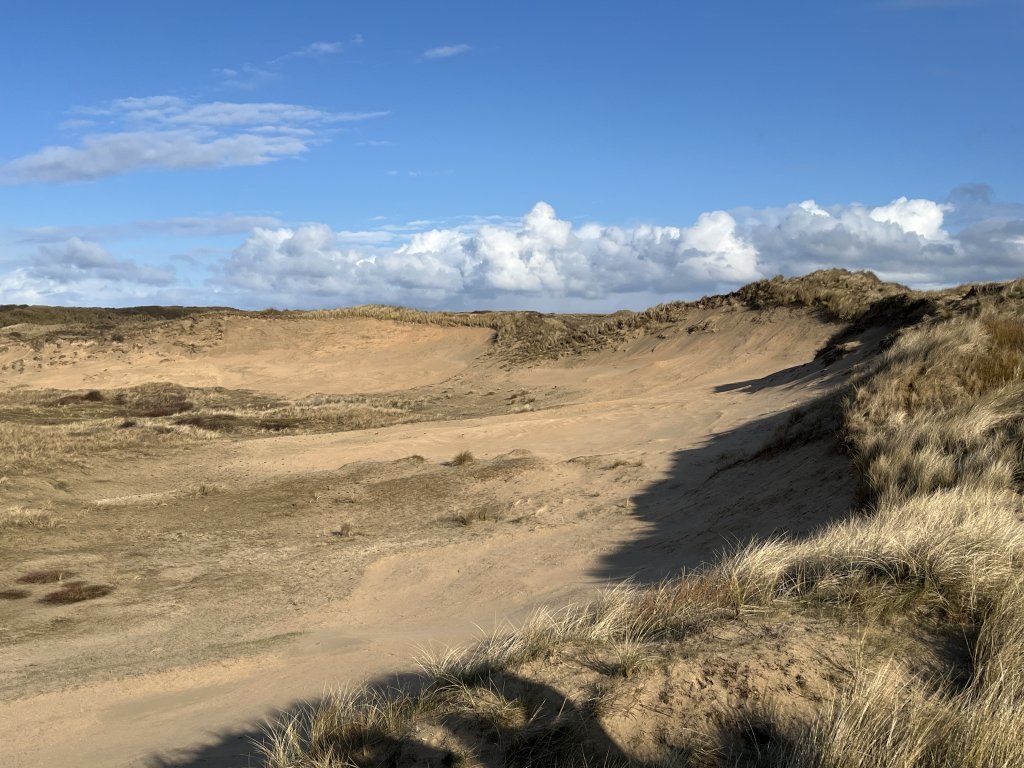
Sometimes, the excavation of dune tops and the digging of notches is combined with the construction of drift pits. A large part of the drifting sand ends up in these pits, only to drift further into the dunes. This allows the calcareous sand to spread further—which is good for biodiversity—and the dunes to continue growing further on.
Natural reinforcement
With relatively minor interventions, in addition to the sand replenishment carried out by RWS, we can therefore reinforce the process of sand drift to the dunes behind, allowing the dunes to 'grow' in line with the expected rise in sea level. In this way, we are enhancing water safety. We do this primarily by creating space, after which nature takes over our work. This only happens in places along our coast where the dunes act as a flood barrier that is much wider than just the first row of dunes.
Restoring biodiversity
At the same time, we are restoring biodiversity; calcareous sea sand gives rare species a chance to return to the dunes. That is why grooves are also being dug in places where the dunes are already strong enough to withstand a significant rise in sea level. This gives lichens, dune violets, and rock pipits, for example, a chance to thrive.