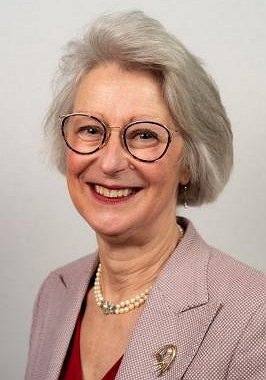
Elly Koning
What made you decide to become a board member?
I decided to run for a board position because I wanted to play a practical role in regional public administration—one that would be largely or entirely free of political bias. In addition, I have family members who have also served on the polder’s board.
What do you like most about your role as a director?
What I enjoy most is the role of steward—preserving and maintaining this area for future generations so that they can live, reside, enjoy leisure activities, and work here in our beautiful region.
What do you find most enjoyable or interesting about your role as a director?
That you make joint key decisions that have a long-term impact. Think, for example, of sand-based solutions such as the Hondsbossche Duinen and dike raising projects.
What do you think are the defining characteristics of the role of a director?
Shared responsibility for our core tasks, with discussions focused on the substance of the matter. Water is vital to our immediate living environment.
How do you balance your role as a director with other responsibilities, such as work or your personal life?
I didn't make that decision until later in life, when I felt that my family and business could manage without me for longer periods of time. Now that I'm retired, it's even easier to plan around.
What does your typical week or month as a board member look like?
My work as a board member and party leader requires me to dedicate at least one day a week to it. However, it often ends up taking up more time due to additional responsibilities I’ve volunteered to take on. But that’s my choice; the world of water management is fascinating in all its various facets.
On Wednesdays, there is a committee meeting, a CHI meeting, or a thematic meeting. The week before, we discuss the meeting materials during our party’s caucus meeting.
Twice a year, we hold a meeting of Waterlelie, the association of female water board directors, which provides an opportunity to “take a look behind the scenes” at another water board.
We also organize field trips with our own water board to visit projects under construction or upon their completion. In addition, we hold meetings where we engage in dialogue with stakeholders. Their input helps us reach well-considered decisions.
I also meet with our party’s executive committee four times a year to update them and set the administrative guidelines.
Once every four years, things get especially busy in the run-up to the elections as parties strive to present themselves to a wider audience so that people will vote for them.
What has serving as a director brought you?
An incredible amount: a wealth of knowledge and personal growth, a lot of fun, and the opportunity to meet new people and encounter new ideas—even if you don’t always agree with them—and the discussions that follow. And being open to new (technical) developments and their application within the water board.
What is it like to work as a director?
I find this both challenging and forward-looking—working to preserve this beautiful area below sea level for future generations. I do it with conviction and great enthusiasm.
Why should people become board members of the water board?
To meet the challenge of keeping the HHNK area livable in the broadest possible sense and preserving it for future generations.
What makes working as a director challenging or appealing?
You may be a good steward, and future generations will be the ones to judge whether you were. Moreover, we are a democracy with our own tax system. It requires a great deal of responsibility to spend these funds in a proper and accountable manner.
What advice would you give to prospective board members?
Go for it—it’s a wonderful challenge and of vital importance to our region.
What is your top tip for prospective board members?
Make time for it! And enjoy it!