Additional funding for sand replenishment in the Hondsbossche Duinen
The Hollands Noorderkwartier Water Authority (HHNK) and the Ministry of Infrastructure and Water Management (I&W) have agreed on a new maintenance strategy for the Hondsbossche Duinen. Both organizations, each with their own responsibility for local water safety, will bear part of the costs for future sand replenishment. The aim is to protect the hinterland against flooding. Now that our general board has made a decision on the contribution to the costs, the cooperation agreement can be drawn up.
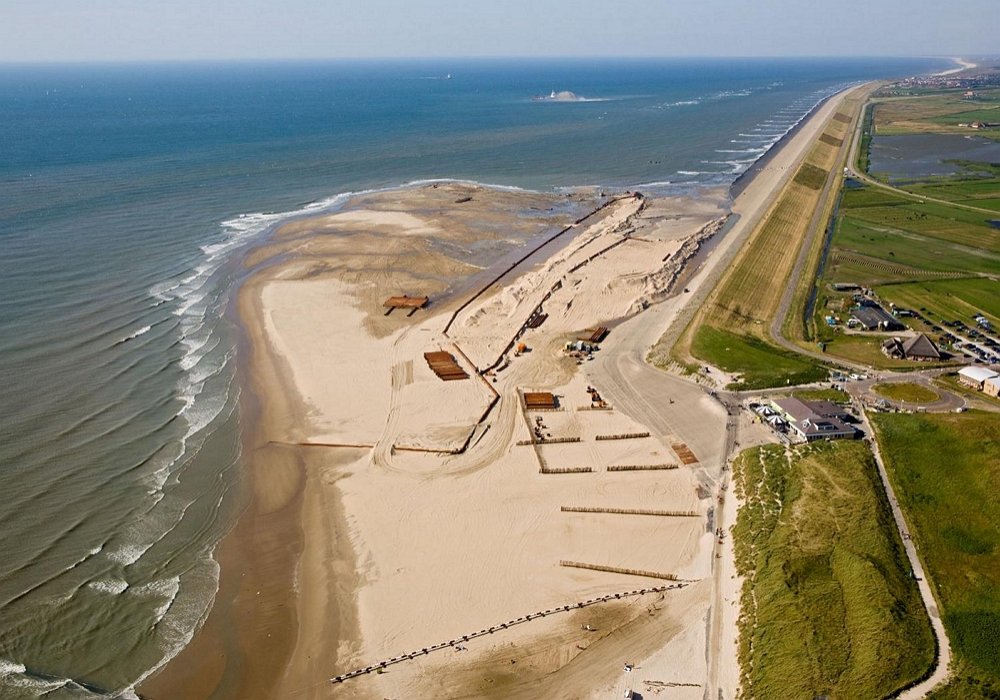
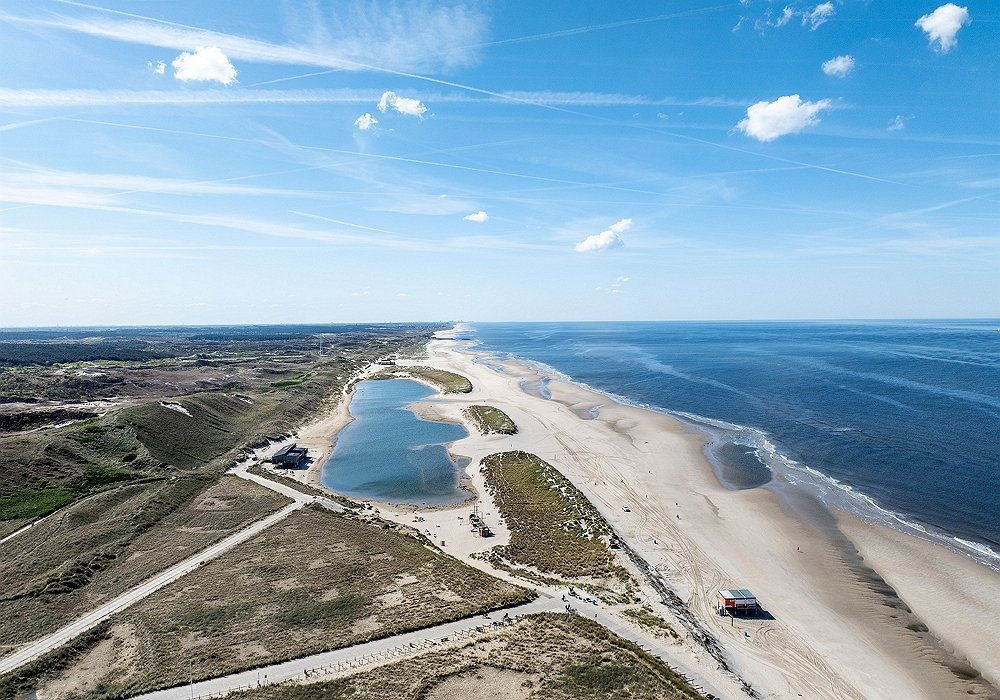
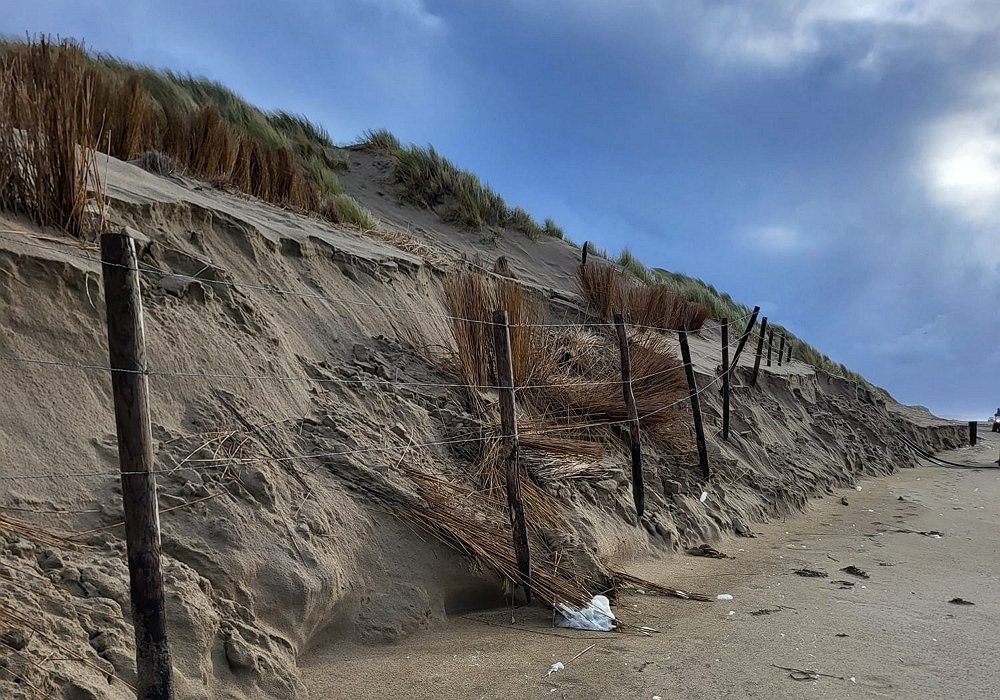
With a safe coastline, thriving nature, and plenty of recreational opportunities, the Hondsbossche Dunes are a great success. These new dunes were created when it became apparent that the Pettemer and Hondsbossche Sea Defenses no longer met water safety requirements. However, in some locations, the newly deposited sand is washing away faster than anticipated. This is causing part of the beach and dunes to disappear, which means that—without sand replenishment—water safety could be compromised in the long term.
New budget
When it was completed in 2015, it was anticipated that a one-time sand replenishment would not provide lasting protection for the coast. Just as sand is continuously replenished along the entire coast of North Holland, sand replenishment is also necessary here. In 2023, it became clear that the maintenance budget would not be sufficient until 2035, when RWS takes over management. That is why additional budget has now been made available.
Keeping the coast safe
Because the Hondsbossche Duinen would also contribute to the 'spatial quality' and thus to nature and recreation, the impression arose that the sand replenishment would guarantee a minimum beach width. Moreover, the contract with the contractor stipulated that new sand replenishment would be planned if 50 metre beach width were at risk. "However, beach pavilion owners cannot derive any rights from this. You have to see it as a signal to take action to replenish," explains water board member Arnold Langeveld. "Erosion was faster than we had calculated. As a result, the coastline is shifting further and further inland, which is causing problems for businesses."
Disappointing beach pavilion owners
Langeveld regrets having to disappoint the beach pavilion owners. "We are responsible for water safety and must ensure that the flood defenses are strong enough to protect the hinterland. We already have to set aside millions for this," Langeveld explains the decision. "We cannot make that kind of tax money available for beach recreation." The task of RWS and HHNK is limited to ensuring water safety. Nevertheless, the project can also be considered a success in terms of recreation. "Our coastline is no longer interrupted by the hard barrier and invites endless beach walks. We are also proud of all the extra nature. A paradise for native plants and birds, such as the ringed plover."
The Netherlands has grown a little
The Hondsbossche Zeewering was managed by HHNK, and this now also applies to the Hondsbossche Duinen. The former coastline—the foot of the dike—is now hundreds of meters inland. Beyond that lie the vast dunes, and so the Netherlands has grown a little. With sand replenishment by RWS, the intention was to allow the coastal foundation to grow further, as is happening along the entire Dutch North Sea coast. But the sand washes away and does not blow onto the beach and into the dunes. The system of dynamic coastal management, working in harmony with nature, does not seem to be working here. Chief Inspector Director of Rijkswaterstaat West-Nederland Noord, Bregje van Beekvelt, indicates that the basic coastline for the Hondsbossche Duinen will not be established until 2035. "Where the boundary will eventually lie will depend on the balance between natural erosion and sand replenishment."
St. Elizabeth's flood of 1421
"You can try to calculate how much sand will be carried away by the sea, how many storms there will be, and where the sand will ultimately end up, but we are talking about an exceptional stretch of coastline here," says Langeveld. Ever since the St. Elizabeth's flood of 1421, engineers have been racking their brains over coastal protection in this area. As is well known, the entire village of Petten lies in the sea. Time and again, this stretch of coastline proves to be more stubborn than expected. And even now, nature is proving difficult to control. "We can certainly speak of a success here, but the amount of sand required was not estimated correctly. So we are going to supplement it together and thus maintain water safety."