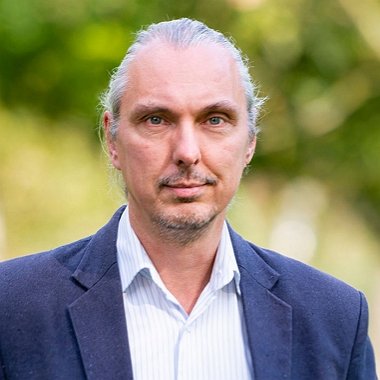
Fabian Zoon
What made you decide to become a board member?
Water quality. I’m really concerned about that. Nature needs clean water, (organic) farmers want clean water, and we want to enjoy recreational activities in it, too. Several people said, “Are you worried about it? Then you should join the water board.” No sooner said than done.
What do you like most about your role as a director?
On the one hand, you’re close to the people. Water is everywhere, and so is the water board. But you also think about the bigger picture. What do we consider important? What do we want North Holland North to look like? What do we do with our wastewater? The water board also owns a lot of land. We can use that land to generate energy or turn part of it into nature. Those are the kinds of decisions we make.
What do you find most enjoyable or interesting about your role as a director?
I’m a technical person. Water management is, in a way, technical—but in a way that’s easy to understand. What does reed do in a ditch? What does it mean to direct water to a certain place? That’s both technical and very insightful. It’s that combination, in particular, that I enjoy.
What do you think are the defining characteristics of the role of a director?
We talk to and listen to one another, so that we can reach a consensus together. Everyone approaches this from a different perspective: keeping costs as low as possible, caring for nature and animals, or preserving space for agriculture. We don’t have to agree with one another, but we do understand each other.
Ever since I joined the board, I’ve started looking at news reports differently. When you’re out cycling, you can’t help but notice how often you see the water board’s logo.
How do you balance your role as a director with other responsibilities, such as work or your personal life?
Most of my time can be arranged flexibly. Officially, I’m involved with the water board on Wednesday afternoons and evenings. I take that into account in my work. But it’s also easy to accommodate in my personal life. It’s actually a bit like a team sport. You have practice during the week. You have to prepare a bit at home, and every now and then you go on an outing together.
What does your typical week or month as a board member look like?
Every other Wednesday, we have a caucus meeting, and the water board usually organizes a session then to brief us on a topic. On the other Wednesdays, we have one or two meetings that last a few hours. In between, you read through the documents.
I’m also the party leader, so I have to make sure the party meetings are scheduled and that everyone’s feeling okay. That’s officially what I do.
But it’s also become a hobby of mine, so I also read reports, attend a symposium, or join a webinar. But that really depends on how much time I have.
What has serving as a director brought you?
I understand the (water) world much better now. I realize that we live in a pretty precarious part of the world, right below sea level. I realize that climate change is a real issue we’re already facing. And I realize that we need to be extra careful with our water.
What is it like to work as a director?
For me, it’s like a warm bath. It’s political, technical, and about nature, and you get to meet people who see the world differently—and who, sometimes, aren’t as far removed from you as you first thought. I’ve learned so many new things.
Why should people become board members of the water board?
Want to learn something? Join the water board.
Want to understand how water flows in North Holland? Join the water board.
Do you enjoy having substantive discussions with people? The water board.
Are you concerned about the ditch in your neighbourhood? Water Authority.
Aren't the taxes too high? Or do you want to get into politics? You can do it all at the water board. Become a board member.
What makes working as a director challenging or appealing?
It really is about your own surroundings. The ditch in your neighbourhood, when you flush the toilet. When it rains or when it hasn’t rained in a long time. You start to look at these things very differently, and you genuinely worry whether everything will be okay. I’ve also come to have a lot of admiration for the people at the water board—they have a wealth of knowledge. That takes a lot of the worry off my mind (in the short term).
What advice would you give to prospective board members?
Are you a member of a political party? Apply for a spot on the ballot. Or apply to one of the organizations with reserved seats. If you’re not a member yet, just get in touch with one of the water board members. They can tell you more.
What is your top tip for prospective board members?
The most important thing is to apply. And you need to do it now, because many parties are currently putting together their candidate lists. Don’t wait too long. After all, elections are held only once every four years. Even if you’re still on the fence, because otherwise you’ll be too late.