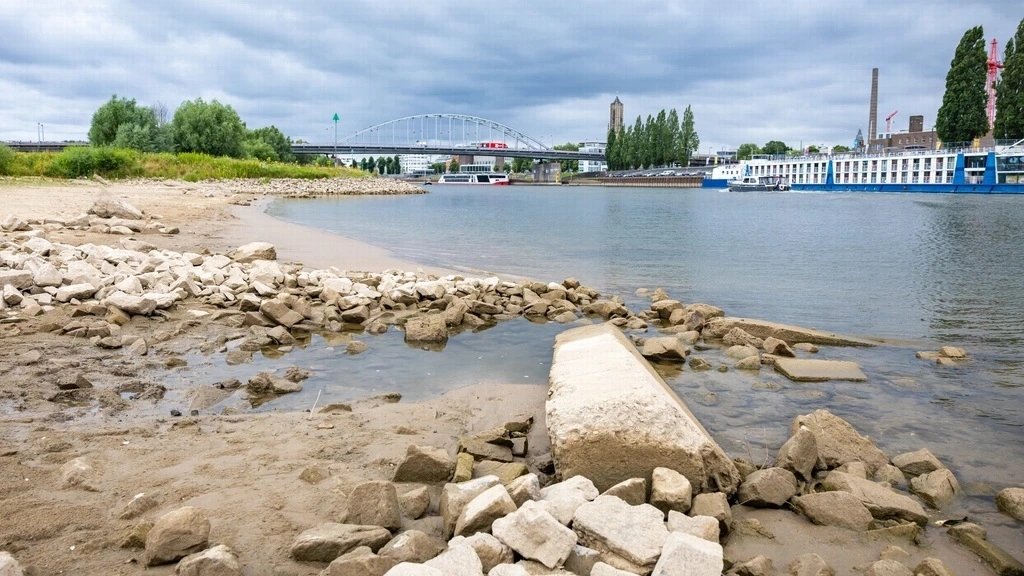
Drought Live Blog
In this live blog, we'll keep you updated on the current drought situation in our management area.
Be sure to check out our FAQ page for more information.
Update September 4
Drought Period Ends
Due to the rainfall, the precipitation deficit has decreased, and water is once again flowing in from the Rhine. The drought is therefore behind us. Dike inspections revealed that there are still six locations that require special attention. We will continue to monitor them. This includes the dike near the Broekermeer. The ban on grazing on the Wadden Sea dikes will remain in effect for the time being.
Update August 26 (2)
Preventive Measures Against Drought Cracks at Broekermeer
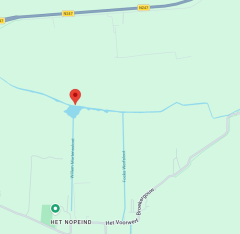
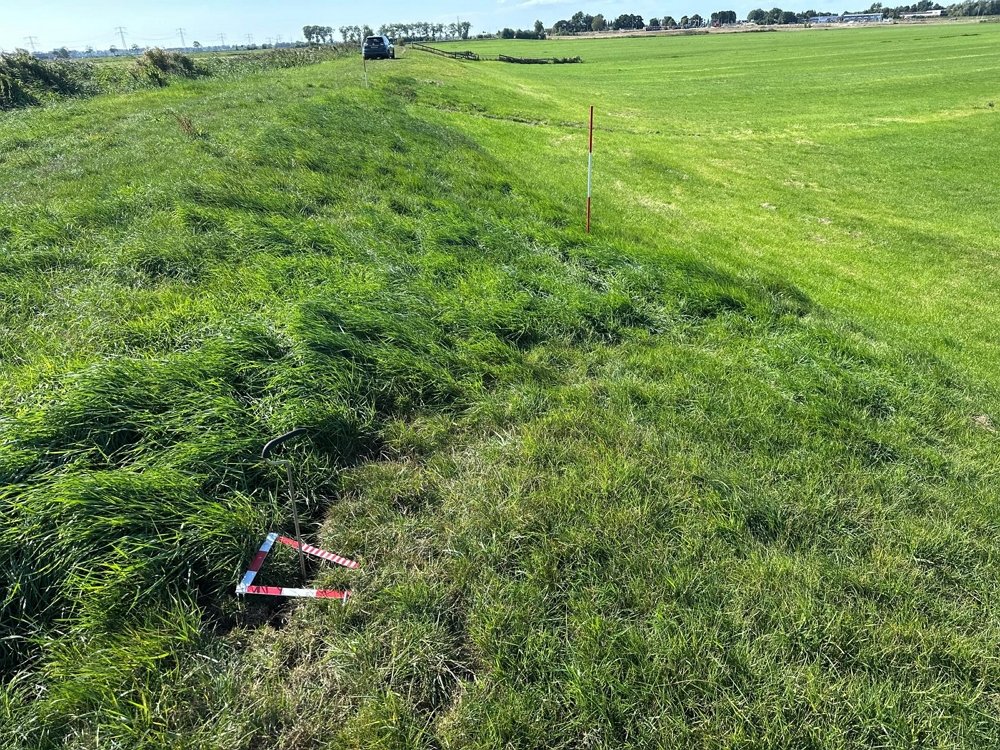
The Hollands Noorderkwartier Water Board (HHNK) is beginning preventive measures today on the dike along the Broekermeerringsloot due to cracks that have formed in the dike. This was revealed by inspections conducted in response to the ongoing drought. The location is on the south side of the Broekermeer, upstream from Het Nopeind. The dike is being monitored more closely because there are signs that may indicate incipient instability. At this time, the situation is under control but remains vulnerable. HHNK is therefore taking preventive measures to be able to act quickly should the dike become unstable.
Damming the Broekermeerringsloot
HHNK is taking measures to ensure that the water in the ditch running alongside the dike is isolated from the rest of the water system. This prevents large amounts of water from flooding the land behind the dike in the event of a dike breach. In this way, we minimize potential damage. The Broekermeerringsloot will be dammed by depositing soil (dike clay) at several locations and closing a culvert. From our depot in Ursem, tractors with dump trucks carrying soil are traveling to the site via the access route from the N247, or via the Termietergouw and the Nopeind. Four dams are being constructed by dumping soil, and a culvert is being sealed. The work is expected to continue into the weekend.
Inspection and Monitoring
To continue monitoring the dike accurately, the grass on the dike is mowed so that the cracks remain clearly visible. This is done using a tracked mower—a so-called remote-controlled mower—to minimize the impact on the dike. The clippings are blown aside with a leaf blower. A drone is deployed to take aerial photographs and collect detailed and elevation data. In addition to this data, the dike is continuously monitored through visual inspections for cracks and subsidence using survey poles, soil testing, and analysis by dike experts.
Update August 26 (1)
Restrictions on recreational boating have been lifted
HHNK has rescinded the measures from the regional flood control plan. This means that the lock restrictions for recreational boating no longer apply. These restrictions had been in effect at twelve locks near Den Helder, the North Sea Canal, and the IJ in Amsterdam. In addition, the fish passages will reopen. The recommendation against flooding crop fields has also been lifted.
This decision was made in consultation with the surrounding water boards, Rijkswaterstaat, and other partners in the IJsselmeer region. Weather forecasts, expected river discharge, and declining water demand provide sufficient leeway for this. The water level of the IJsselmeer is fluctuating around NAP -0.30 metre, the lower limit of the summer water level.
Grazing Ban Remains in Effect
The grazing ban on the Wadden Sea dikes on Texel and the mainland remains in effect. This measure is not related to the displacement sequence, but to the condition of the dike. The grass cover has seriously deteriorated in several locations due to the prolonged drought combined with previous grazing. This has compromised the erosion resistance of the grass cover. High tides, waves, and precipitation could compromise the stability of the dike. Therefore, the grazing ban remains in effect, and we will continue to monitor the quality of the grass cover.
Be sure to conserve water
Although the situation is improving, it remains important to use surface water (in ditches, canals, and lakes) sparingly and efficiently. By using water only where it is needed and avoiding unnecessary withdrawals, we can work together to keep the drought situation stable.
Update August 19
No Ban on Irrigation in Hollands Noorderkwartier
There will not be a ban on irrigation in our management area after all. Measures will not be further escalated because the current measures are having a sufficient effect. In addition, the recent rainfall and forecast precipitation are reducing the demand for surface water. The current stage of the natural and agricultural cycles is also contributing to a decrease in water demand. Evaporation is decreasing because temperatures have dropped and the number of hours of sunshine is declining. Water levels in the IJsselmeer and Markermeer remain low but stable. The other measures that have been implemented (dyke inspections, grazing bans on the Wadden Sea dyke and on Texel, and lock restrictions) will remain in effect. The recommendation not to flood plots of land also remains in effect. The impact of these measures is helping to ensure that we do not need to escalate restrictions.
IJsselmeer and Markermeer
Water levels in the IJsselmeer and Markermeer have continued to drop recently, but are currently more stable than forecast. The water level in the IJsselmeer is fluctuating around NAP -0.30 m. The forecast still indicates a slight drop to NAP -0.33 m, but no further decline is expected. River discharge from the Rhine and IJssel is also stabilizing. In the coming weeks, it will even increase slightly, meaning it is no longer expected to decline further.
Should the situation worsen, we are prepared to act quickly to implement further measures.
Update August 17
HHNK advises: Do not flood crop fields
The rain we’ve had over the past few days is very welcome for nature and to alleviate the ongoing drought, but it is still far from enough to restore freshwater levels in the IJsselmeer and Markermeer to normal. We therefore advise the agricultural sector not to flood their fields. Flooding farmland is done, for example, to kill harmful nematodes, fungi, and persistent weeds. In addition, we are preparing a ban on the withdrawal of surface water for crop irrigation. These developments have been shared with the members of the Agricultural Advisory Committee. During the meeting on August 13, we informed the water-intensive sector about the current situation and what may happen in the coming period. We explained possible measures and what they mean for the agricultural sector. Due to the current situation, decisions must be made regarding the allocation of available freshwater, based on the Water Allocation Strategy.
Freshwater supplies are dwindling
The precipitation deficit in Hollands Noorderkwartier, at 310 mm, is higher than the national average and higher than that of the record year of 1976. In addition, water levels in the Rhine and IJssel rivers are at historically low levels. Demand for water far exceeds supply, and this situation is not expected to change for the time being. Furthermore, the salinity of the IJsselmeer is increasing, leading to salinization.
Looking Ahead to the Coming Week
Depending on how the situation develops, a decision may be made this week to impose withdrawal bans. This means that surface water may not be used, for example, to irrigate agricultural crops, but possibly also gardens, sports fields, and public parks. We are in close consultation with water boards, Rijkswaterstaat, and other partners in the IJsselmeer region, and we are continuously monitoring the situation, weather forecasts, and freshwater availability in the IJsselmeer. No significant precipitation is expected in the near future; at least not enough for the time being to restore the water level in the IJsselmeer to normal. Therefore, we are preparing for a situation in which additional measures will be necessary.
Update August 12
Navigation Restrictions in Den Helder, the North Sea Canal, and the IJ
Freshwater levels in the IJsselmeer and Markermeer are currently declining rapidly, and salinization is increasing. The Hollands Noorderkwartier Water Board (HHNK) has therefore announced restrictions on recreational boating at twelve locks. The lock restrictions will be implemented at the Koopvaarderschutsluis and the Boerenverdrietsluis in Den Helder, as well as in the Kolhorn area and at the North Sea Canal and the IJ in Amsterdam. Commercial vessels may continue to use the locks. For recreational boating, the locks will open only very rarely. The measure takes effect on Thursday. In addition, HHNK is closing the fish passages between freshwater and saltwater. These measures are the first steps in the regional displacement plan. They will ensure that significantly less saltwater flows into the area, reducing the amount of freshwater HHNK needs to flush through the system.
Remco Bosma, dike reeve of the Hollands Noorderkwartier Water Board: “We realize that recreational boating is being affected by these restrictions in the middle of summer. Residents are now experiencing the effects of the drought on a large scale. As a water board, it is our responsibility to distribute the available freshwater sustainably and sparingly across the region and among the various types of water users in the event of an impending water shortage. To do this as fairly as possible, agreements have been made with all relevant partners in the HHNK management area and around the IJsselmeer region. The goal is to minimize social and economic damage as much as possible. We are implementing these initial measures from the so-called Water Distribution Strategy to minimize the impact of saltwater as much as possible.”
Den Helder and Kolhorn
Once the Koopvaardersschutsluis and Boerenverdrietsluis locks in Den Helder are opened exclusively for commercial shipping, there will be less mixing of saltwater with the freshwater in ditches and canals. As a result, saltwater intrusion in the area will be significantly reduced, and less water will be needed for flushing to combat salinization. At the Kooysluis, Braaksluis, and Molenkolksluis locks, where the water is brackish, the lock-opening restrictions also apply to conserve fresh water.
North Sea Canal
The lock passage restriction applies to a total of twelve locks, including seven in the area from Amsterdam Noord to
Assendelft: the Willem I Lock and Nieuwendam Lock (Amsterdam), the Wilhelmina Lock, Hanepad Lock, and Groote- or Hondsbosche Lock (Zaandam), Overtoom Lock (Westzaan), and the Schermers Lock (Nauerna).
Commercial Shipping
The measure initially applies to recreational boating. The restrictions do not apply to commercial shipping. This means that commercial vessels have priority over recreational vessels when passing through locks. As a result, wait times for recreational vessels may increase. Locks are operated only when the lock chamber is full.
Fish Passes
The fish passages from HHNK to the saltwater open water have a permanent opening, as is the case at the De Helsdeur pumping station and the Oostoever outfall, both located in Den Helder. Thanks to these fish passages, fish can easily move from one body of water to another. Saltwater can enter through the openings in these fish passages. Closing the passages prevents this and reduces the amount of freshwater needed to counteract saltwater intrusion. The fish passages are generally used only during migration periods. July and August, when water demand is highest, fall outside the migration periods.
Update August 10
Record Drought at HHNK – Agricultural Advisory Committee Convened to Discuss Water Rationing Measures
The average precipitation deficit in our management area has risen to a record high of 310 mm. Never before has the precipitation deficit been this high on this date. This means the precipitation deficit is higher than the national average precipitation deficit in the record year of 1976. In addition, freshwater reserves in the IJsselmeer and Markermeer are rapidly declining. This brings the water displacement sequence outlined in the Water Allocation Strategy into focus. We are now preparing to implement it.
Freshwater supplies are rapidly dwindling
Water levels in the IJsselmeer and Markermeer are falling. The level is expected to reach NAP -0.30 metre by the end of this week or early next week. This means that decisions must be made regarding the allocation of available freshwater. Not all water demands can be met without restriction.
Agricultural Advisory Committee
We are therefore convening the Agricultural Advisory Committee on Thursday, August 13. We want to inform the water-intensive sector about the current situation and what may happen in the coming period. During this meeting, we will discuss with representatives from the agricultural sector what the implementation of the water restriction measures means for agriculture and the regional water system.
Update August 7
HHNK Imposes a Grazing Ban
The Hollands Noorderkwartier Water Board (HHNK) is imposing a grazing ban starting Saturday, August 8, at 6:00 p.m. on the Wadden Sea dike on Texel and on the mainland. This applies to the Wadden Sea dike on Texel, the Balgzand dike, the Amsteldiep dike, and the dike on Wieringen along the Wadden Sea. From that time on, livestock must be removed from the dikes and may no longer graze there. All sixteen leaseholders have been notified. They must find an alternative location for their livestock. The ban will be lifted once the grass cover has sufficiently recovered.
The grass cover on the Wadden Sea dike on Texel and on the mainland has seriously deteriorated in several locations due to the persistent drought combined with grazing. This compromises the erosion resistance of the grass cover. Without intervention, high tides, waves, and precipitation during the storm season (beginning in October) will compromise the dike’s stability. This is evident from inspections conducted by HHNK. For this reason, HHNK is imposing a grazing ban. Dike Commissioner Remco Bosma: “This is a unique measure that we last implemented in 2018. It’s hard to imagine now, but in two months our dikes must be able to withstand storms and high tides from the sea. Further deterioration in the safety of the dikes means there isn’t enough time to restore the grass cover in the coming months. In addition to the grazing ban, we’re preparing further measures to implement, should they be necessary.”
Update August 6
HHNK Will Inspect 400 km of Drought-Prone Dikes
Due to the growing precipitation deficit, HHNK will begin inspecting 400 km of drought-sensitive dikes starting Wednesday, August 12. This will give us insight into the condition of the dikes and allow us to take any necessary measures. This is a precautionary measure based on the precipitation deficit and the forecast. At this time, the dikes are stable.
Our site managers and maintenance staff conduct inspections in pairs. We also use drones, which allow us to continue monitoring any damage we’ve identified.
The inspection tour is aimed at the timely detection of, among other things, drought cracks, deformations, subsidence, wet spots, and signs of drought-related effects on a dike, such as water flowing beneath the dike or soil slippage.
The dikes being inspected are located throughout our management area, between Amsterdam-Noord, Den Helder, and the island of Texel. About 40 HHNK employees have two weeks to inspect the 450 km.
Precipitation deficit continues to grow
The current precipitation deficit in our management area averages 296 mm. It ranges from approximately 275 mm near Waterland to approximately 355 mm near Den Helder/Texel (national average: 271 mm). The likelihood of significant precipitation over the next two weeks is very low.
We’re not out of the drought just yet this summer. With every week that passes without significant rainfall, the situation worsens and the need to expand measures grows. HHNK is developing these measures so they can be implemented if the situation calls for it.
IJssel Lake and Marker Lake
Due to low river discharge and the lack of precipitation, water levels in the IJsselmeer and Markermeer are also falling, and salinization is increasing. This “national rain barrel” can help supply freshwater to the northern Netherlands and the HHNK management area for a long time, but the water supply is not infinite, and even there, the limits are coming into view. The current drought is therefore exceptional.
Update July 31
Escalation to Alert Level 2
Due to the ongoing drought, combined with a further decline in water inflow from the Rhine, the nationwide escalation to water shortage phase 2, and preparations for measures that may be required, HHNK is escalating to alert phase 2. This will enable us to implement the measures we are currently preparing more quickly if necessary.
Questions and Answers
A Q&A page about the drought was added to our website today.
Enough drinking water
PWN reports that there is sufficient drinking water available in North Holland. Residents do not need to worry about this. However, residents can help by using water wisely. For more information about drinking water during this dry spell, visit the PWN website:
Original post, July 30
Ban on Grazing on Wadden Sea Dikes in the Works
The drought continues, and the precipitation deficit is increasing in North Holland. As a result, water will become scarce in the short term. HHNK is appealing to all residents and farmers who irrigate their gardens and fields. Deputy Water Board Chair Klazien Hartog: “Irrigating during the day causes a lot of evaporation. To make the available water last longer and be used more sustainably, I urgently call on farmers to irrigate their fields at the end of the day or in the evening; this will prevent additional evaporation. Only by all of us—including residents—using as little surface water as possible can we delay the moment when we run into trouble.”
In addition, HHNK is preparing a grazing ban. This applies to livestock on the dikes along the Wadden Sea and Texel. The dikes are dry, and the grass is struggling. Hartog: “We’re looking ahead, and if we don’t take action now, the grass won’t have enough time to recover before storm season. The grass needs to be in good condition by then. That’s why we have to take this measure now.” No significant precipitation is expected in the near future. Therefore, HHNK is simultaneously preparing for a situation in which additional measures may be necessary.
Precipitation deficit continues to grow
Nationwide, the precipitation deficit currently stands at 237 millimeters. In our management area, it is even higher. In Waterland—the area we use as a benchmark for our management area—the precipitation deficit has risen further to around 250 millimeters. Waterland is home to many drought-sensitive dikes. That is why we use this area as our benchmark.
Freshwater Availability in the HHNK Area
Situation on the mainland of North Holland
Despite the drought, there are currently no issues with water availability within our management area. This is because there is still sufficient freshwater available from the IJsselmeer and Markermeer.
Situation on Texel
We have a greater precipitation deficit on Texel than on the mainland. There, the precipitation deficit is, on average, 75 mm higher. The water in the ditches in the lower-lying areas is too salty for irrigation. Rain is the main source of fresh water on Texel. It is not possible to bring in water.
Salinization is being closely monitored
Due to the ongoing drought, the risk of salinization is increasing. At this time, there are no immediate problems, but the expected drought in the coming weeks makes continuous monitoring necessary. Salinization is steadily increasing.
Extra attention to the dikes
We use inspections to monitor the condition of our dikes. During the first inspection of the 65 km of drought-sensitive dikes, 77 instances of drought damage were identified. There is currently no immediate danger. There are six locations that require additional monitoring and remedial measures. We aim to address these locations by mid-October.
To prevent problems with the dikes caused by dried-up dike ditches, two pumps have been installed at the dike ditches of the Monnickmeer and the Beemster. In addition, culverts have been opened to maintain the water level in the dike ditches. Dike ditches provide a certain amount of pressure and moisture to keep the dikes stable.
Swimming Water: Watch Out for Blue-Green Algae
Warm, dry weather increases the risk of blue-green algae blooms. These have already been detected at a number of locations. Contact with blue-green algae can cause health problems. People may experience skin irritation, itching, red eyes, headaches, nausea, or diarrhoea. Pets, especially dogs, are also susceptible to blue-green algae.
Looking Ahead to the Next Two Weeks
The drought will continue to worsen in the coming weeks. The current forecast is that the precipitation deficit could reach 271 millimeters nationwide and 284 millimeters in Waterland in about two weeks. Water levels in the IJsselmeer and Markermeer are continuing to drop. We are preparing measures that can be implemented quickly if the situation worsens or if it develops as currently expected.
We are preparing for a dike inspection that will cover 500 kilometre high-risk dikes spread across the management area. The last inspection covered 65 km of peat dikes that are particularly prone to drought.
Another scenario we are preparing for is that Rijkswaterstaat imposes an intake restriction on HHNK for water from the IJsselmeer and Markermeer, which would prevent us from meeting all water demands. Less water would then be available because water levels in these lakes are too low. In that case, the so-called displacement sequence would take effect.
The coming weeks will be decisive in determining how the drought develops. We will continue to monitor the situation on a daily basis and take additional measures as needed.