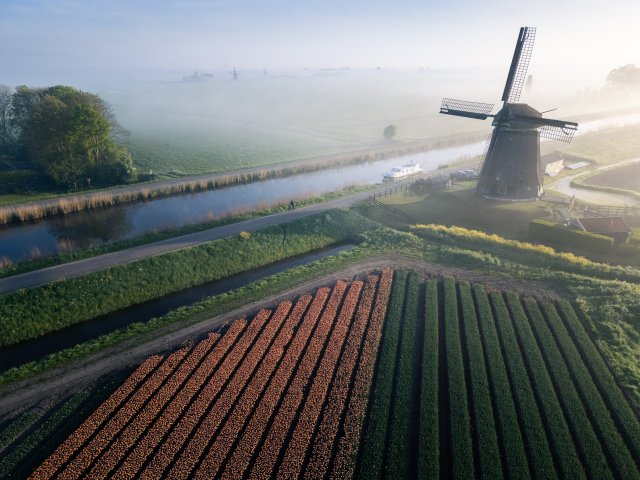
Milling subsidy for polder mills that grind grain
We have adjusted the subsidy for polder mills. In addition to a subsidy for maintenance, polder mills that grind grain will also be eligible for subsidies from 2027 onwards. This so-called 'grinding subsidy' fulfills a long-cherished wish of the millers in the area.
The scheme will come into effect in 2027, at which point millers will be able to apply for a subsidy of up to €1,000 per year. The condition is that the mills within the management area must be capable of pumping water to the reservoir or open water. The administrative decision lists the mills that are eligible for the pumping subsidy.
Water heritage
The drainage polder mills in our management area can still fulfil their hydraulic engineering function in the event of emergencies or flooding. In the event of emergencies such as prolonged power outages or cyber attacks, the mills can support the function of a number of electric pumping stations by moving water from the polder to the reservoir or the open water. The water board wants to promote the drainage of water using polder mills by providing subsidies, among other things.
Request for meal subsidy
The millers had been wanting a milling subsidy for quite some time. Water board member Klazien Hartog is pleased that, together with the millers' association and other organizations, they have succeeded in establishing a good arrangement: "We have gone through a careful process together. The subsidy must meet certain conditions, which is why we took the time to work with the mill organizations to arrive at a widely supported arrangement. We appreciate the millers, because they preserve and maintain our heritage. The best mill is a working mill."
Dry milling
In the past, polder mills were the only way to drain water from the polders and were used to drain polders such as the Schermer or Purmer. A number of mills carry out emergency drainage at the request of HHNK area managers or at the request of farmers without this being laid down in writing. To determine the amount of the pumping subsidy, we looked at the rates charged by other water boards with similar schemes. The subsidy amount we provide falls within the range charged by other water boards.