
Podcast: Storm surge of 1916, 110 years ago
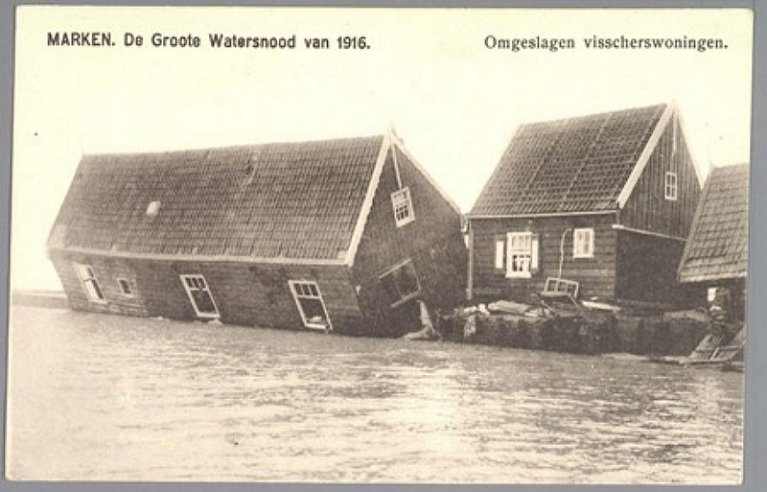
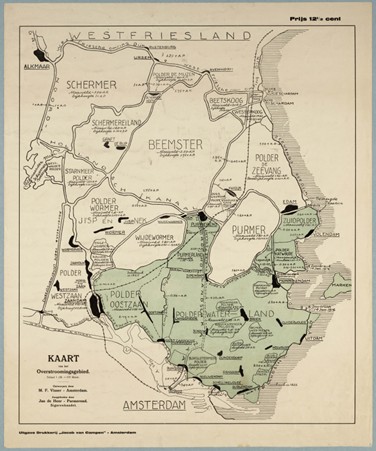
During the night of January 13-14, 1916, a severe northwesterly storm caused major problems in the Zuiderzee area. The storm caused dikes to break in several places. Large parts of North Holland were flooded. Waterland disappeared under water and the eastern part of the Zaan region was also flooded. In addition, the Anna-Paulowna polder largely disappeared under the Zuiderzee water. Sixteen people drowned on the island of Marken. Thousands of people fled. Cattle were forced to be housed in churches, including the Broeker Church in Broek in Waterland, to save them from the flooding land.
Elsewhere in North Holland, people worked tirelessly to prevent dike breaches. In Wijdewormer, the dike was saved at the last minute. Thanks to the efforts of the military and the help of farmers, who transported materials by horse and cart, the polder was kept dry.
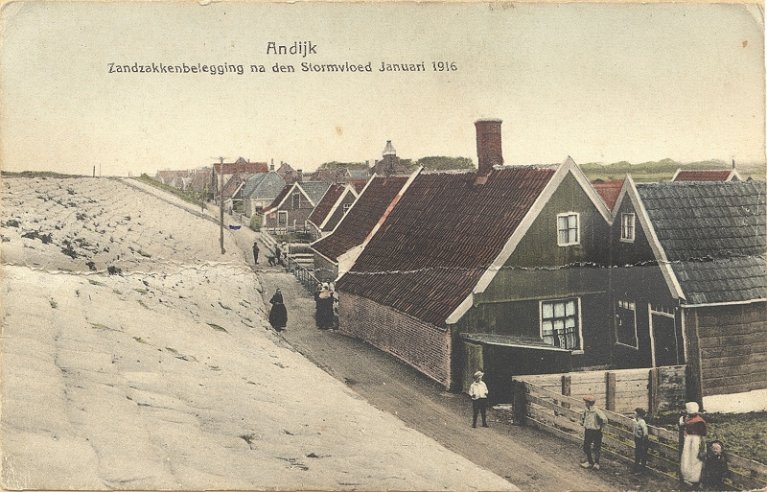
The situation was also critical that night at Andijk and Wervershoof. For hours, waves crashed over the dike, completely soaking the inner side of the flood barrier. First, cracks formed in the mushy dike, then large chunks slid away from the inside of the dike over hundreds of meters. All night long, the villagers worked in the cold and wet. They took tarpaulins and sandbags from the dike warehouse and used them to cover the threatened areas. There, too, the dike held.
The storm surge of 1916 was the decisive factor in the acceptance of Cornelis Lely's plan to close off and (partially) reclaim the Zuiderzee. In 1918, the Zuiderzee Act was passed by the Senate and House of Representatives, and work began immediately. They started with the short Afsluitdijk (1924), followed by others such as the Andijk trial polder (1927), the Wieringermeerpolder (1930), Leemans pumping station, the Afsluitdijk (1932), and then the creation of Flevoland.
We keep the story of the 1916 North Sea flood alive through our water heritage. Historians Diederik Aten and Lars Boon discussed the dike breaches and the consequences of the disaster in North Holland. You can listen to that conversation below.