Preliminary results of research into former landfill sites
Water management authority Hoogheemraadschap Hollands Noorderkwartier (HHNK) is continuously working to improve the quality of surface water. The goal is to achieve clean and healthy water and to comply with the European Water Framework Directive (WFD) by 2027. Part of the approach to reducing emissions to water involves investigating the leaching (= release) of ammonium, PFOS, and PFOA from 46 former landfill sites in the area. Preliminary findings indicate that further investigation is needed at one location, the landfill site at 't Zittend in Westwoud.
Ammonium is a substance that occurs naturally in the environment. In high concentrations, ammonium is toxic to aquatic animals and fish. Data analysis of ammonium leaching shows that only the Westwoud landfill site is cause for concern. This location has a test value for ammonium that is more than 100 times higher than the annual average environmental quality standard (JG-MKN). The test value for each measurement is also well above the maximum acceptable concentration environmental quality standard (MAC-MKN).
PFOS (Perfluorooctane sulfonic acid) and PFOA (Perfluorooctanoic acid)
The data analysis of PFOS leaching shows that all eight locations measured comply with the MAC-MKN. However, the JG-MKN is exceeded at all eight landfill sites, including the Westwoud landfill site, as well as at the reference locations upstream of these landfill sites. At some locations, the concentration of PFOS at the landfill site is higher than at the reference location. The data analysis of PFOA leaching shows that all locations comply with the MAC-MKN. The Westwoud landfill site is the only location where the JG-MKN is exceeded. The reference location upstream does comply.
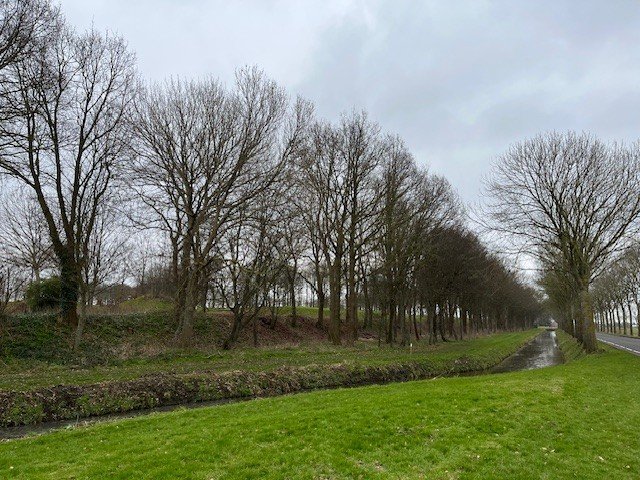
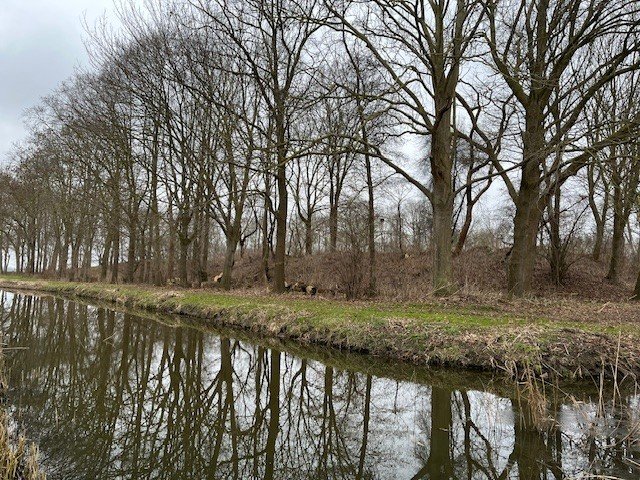
At the Westwoud landfill site, measurements were taken in the ring ditch surrounding the landfill. HHNK will conduct further research into the concentrations of the substances in the receiving surface water downstream of the landfill site. Based on this, an assessment will be made as to whether measures need to be taken. We have informed the municipality of Drechterland and the ABWF about this. ABWF is responsible on behalf of the West Frisian municipalities for managing the landfill site and implementing any measures.
Resampling
For a number of landfills, there is uncertainty about the representativeness of the previously selected sampling locations. For these landfills, resampling at a new sampling location will commence in the summer of 2025. This concerns nine locations for ammonium and three for PFOS and PFOA. For these locations, the final measurements and analysis will take place in 2026.
Research design
The aim of the study was to determine whether the landfills leach ammonium, what impact this has on local surface water quality, and to what extent it negatively affects the achievement of the objectives of the Water Framework Directive. For the study, surface water upstream and downstream of the landfill site was sampled and analyzed. This made it possible to determine whether there was an increased concentration of ammonium at the landfill site compared to the background value in the area concerned.
Additional PFAS measurements were carried out at a sample of ten landfills to determine whether the landfills are polluting surface water. A number of other substances were also measured at all the locations investigated, such as chloride, chemical oxygen demand, nitrogen, phosphorus, and sulfate. The ammonium measurements were carried out four times in July and October 2023 and January and April 2024. Three measurements were carried out for PFOS and PFOA.
The concentrations were tested against the two types of water quality standards that apply to these types of substances:
- maximum acceptable concentration environmental quality standard (MAC-EQS), for the protection of aquatic organisms against short-term peak exposure to the substance;
- annual average environmental quality standard (AEA-EQS), for protection against adverse effects from long-term exposure to the substance.