
View of the coast
Using strategically placed cameras, we monitor the impact of construction and human activities on natural processes such as sand drift, coastal erosion, and dune growth. The collected data has predictive value. This helps us to continue combining recreation and construction on the beach with safe coastal defense in the future. The camera images are used exclusively for scientific research. The privacy of filmed passers-by is guaranteed.
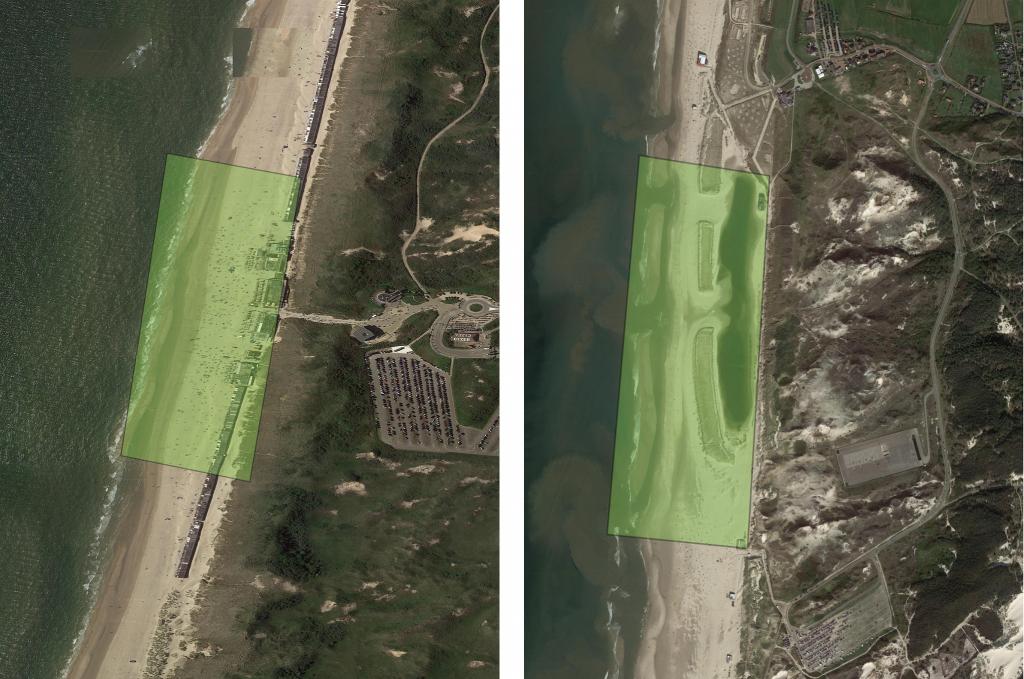
Under the heading 'View of the Coast', we will be investigating the influence of beach pavilions and human activities on sand transport on the beaches of Castricum aan Zee, Hargen aan Zee, and Camperduin until 2025. To this end, camera systems will be installed to monitor the amounts of sand on the beach and at the foot of the dunes during this period. The amount and location of sand influence the safety of the hinterland. The data can help us assess whether and how human activities influence dune growth. For the research, we are collaborating with engineering firm Baars-CIPRO, Delft University of Technology, and Twente University of Technology.
Activities
In the period 2022-2025, camera systems will be installed on poles at three locations.
- In Castricum aan Zee, there are eight cameras monitoring the beach and the dunes surrounding the beach entrance.
- In Hargen aan Zee, a camera is located in the neighbourhood the rescue brigade, facing north to monitor the beach and the edge of the dunes.
- In Camperduin, there is a camera north of the lagoon to monitor the lagoon.
Basis
The aim of the research is to gain insight into the influence of beach construction on coastal safety. This research is a task of general/public interest and is in line with national studies on dynamic coastal management. The behaviour sand is highly dependent on local (weather) conditions and is partly determined by many parameters. Using a specific and targeted measurement setup, the cameras collect the correct data for scientific use and policy-making decisions.