Construction of a fish passage at the Stontel floodgate
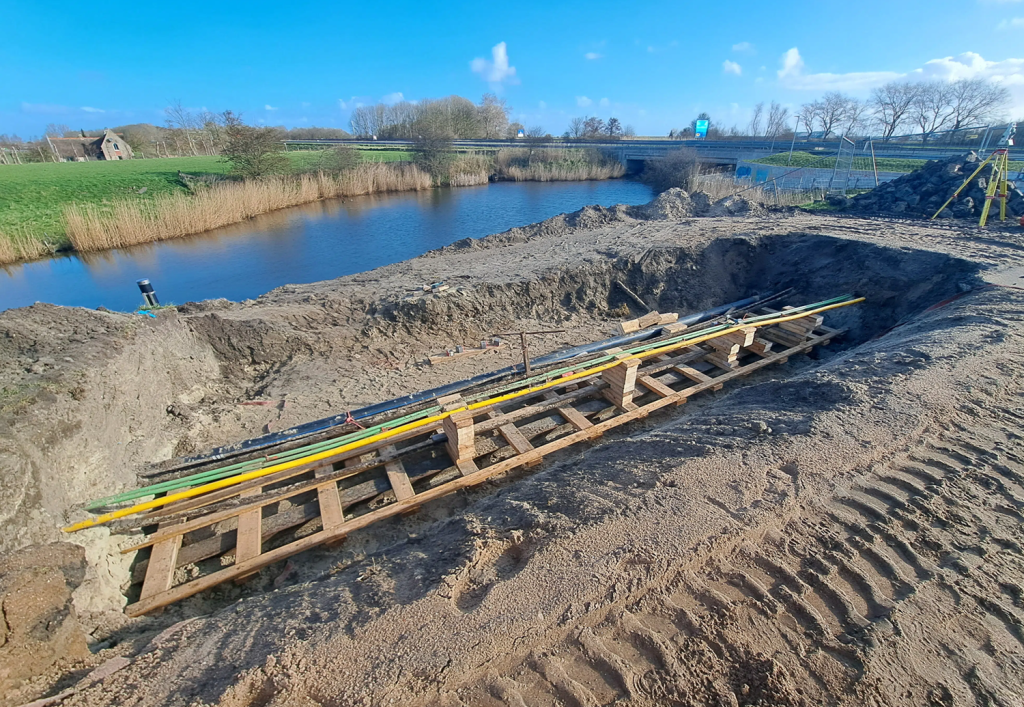
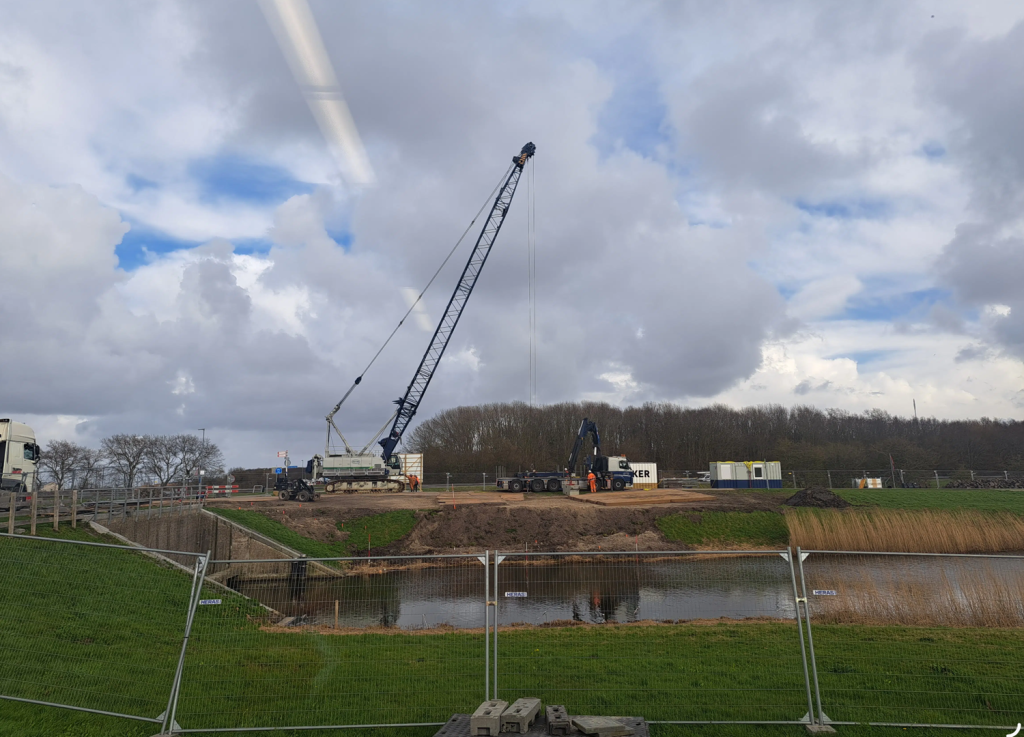
Through the “Improvement of Wetland Infrastructure in Noordkop” project—known simply as the Noordkop project—we are working to improve migration routes for fish and restore species that live in both freshwater and saltwater. At the same time, we are working on a future-proof and more manageable water system in the Noordkop. In recent months, fish spawning and nursery areas have been created in the reed beds of the Spuikanaal, Balgzandkanaal, Amstelmeerkanaal, and the forebay near the Stontelerkeersluis. The next step is the construction of a fish passage at the Stontelerkeersluis near Den Oever. Contractor K_Dekker Bouw & Infra is carrying out this work. Construction will continue until mid-July 2026.
The Stontel floodgate serves as the gateway for fish from the IJsselmeer to the Amstelmeerboezem. However, the current floodgate is difficult for many fish species to pass through due to fluctuating water levels and currents. The construction of a fish passage will make the Amstelmeerboezem more accessible to diadromous fish species, such as glass eels and three-spined sticklebacks, which regularly migrate between saltwater and freshwater. This will allow fish entering the IJsselmeer via the Afsluitdijk to reach the area, and fish entering via Oostoever to flow through or swim to the IJsselmeer.
A unique project
The Noordkop Project is unique in the Netherlands. Along the Wadden Sea coast, the transition from saltwater to freshwater is usually abrupt, whereas many fish species actually require a gradual transition. HHNK is therefore creating a brackish transition zone of approximately 14 hectares in the Spuikanaal near Oostoever. This system operates thanks to a controlled, tide-driven inflow and outflow of water and the Oostoever fish passage, supported by a new pumping station, continuous salinity measurements, a bottom sill, and an automatic control system. Precise regulation of the amount of saltwater is essential, as too much saltwater can have negative consequences for agriculture that depends on freshwater, among other things.
Collaboration
The Noordkop Project is funded by HHNK, the Wadden Fund, the Province of North Holland, and the Ministry of Infrastructure and Water Management. It is part of Ruim Baan voor Vissen 2, a collaboration between the four northern water boards, Van Hall Larenstein, and the Wadden Fund. This collaboration focuses on improving fish migration routes and restoring the ecological connection between the Wadden Sea and the hinterland.