2026 budget: investing in future-oriented water management
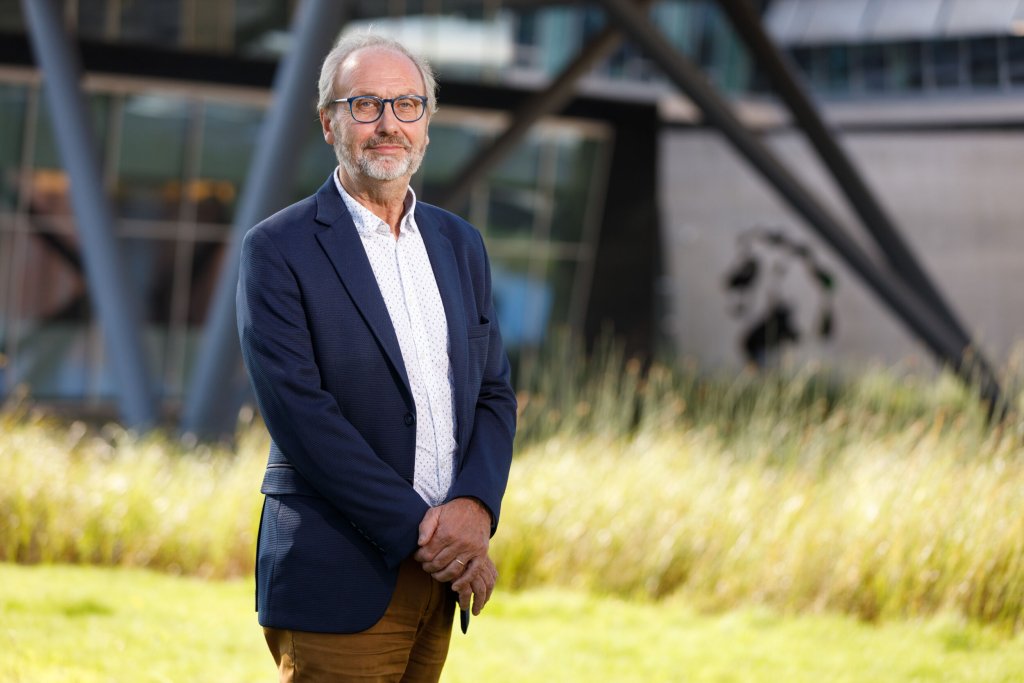
The world around us is changing rapidly. Climate change, stricter laws and regulations, and geopolitical tensions such as unpredictable energy prices are increasing the complexity and (financial) uncertainty of water management. With an eye on the challenges of today and tomorrow, we are investing in smart, sustainable, and targeted solutions. Portfolio holder Resources, Simon Ruiter: "Our tasks are growing, and this requires a forward-looking vision and making choices. In 2026, the work will be organized even more efficiently."
2026 budget adopted
On November 19, the general board approved the budget of €368 million. The net investment amount is €23.9 million higher than in the 2025 budget and amounts to €65.1 million. The difference is mainly due to a number of investments entering the implementation phase in 2026. The increase in tax revenue, excluding road tolls, averages 8.6% in line with the multi-year outlook. For single tenants, this means an increase of €1.30 per month, while for multi-person households with more expensive homes, the increase is approximately €3.70 per month.
Uncertainties
Volatile energy markets, material and capacity shortages, the threat of cybercrime, and policy changes require constant attention and a careful balance between resources, personnel, and social challenges. In 2026, the emphasis will be on setting clear priorities and deploying available resources more effectively. This includes risk-based and predictive maintenance of dikes, pumping stations, and treatment plants. This helps to make well-considered choices and creates room for innovation. At the same time, investments will be made in strengthening the crisis response, so that threats such as flooding, drought, and cyberattacks can be identified at an early stage and addressed preventively.
Future-proof
HHNK is investing in an agile and future-proof organization that is better able to respond to changing circumstances. Sewage treatment plants are on the verge of a radical transformation. In order to meet future water quality and wastewater treatment requirements, such as the removal of micro-pollutants and more intensive wastewater treatment, renovation and maintenance alone are no longer sufficient and a system leap is necessary. Under the banner of The Great Renovation of the Water Chain, our sewage treatment plants are changing from waste processing plants to energy and raw material factories. This will require significant investment expenditure.
Water Framework Directive
In 2027, the Netherlands must comply with the Water Framework Directive (WFD), a European directive aimed at improving the quality of groundwater and surface water. In 2026, HHNK will continue to work on the implementation of the WFD package of measures and the WFD stimulus program for 2024–2027. Monitoring will also be organized in such a way that testing, assessment, and reporting to the European Union can take place effectively in 2027. In preparation for this, studies will be carried out and tools developed for data analysis and the early detection of violations of standards. In addition, we are working with the national government and the province to implement the principle of Water and Soil Steering. This means that the natural characteristics of water and soil will continue to guide spatial planning.
Climate neutral
In 2026, HHNK will continue to work on achieving the climate targets set out in K35 (Climate Neutral 2035) in the areas of emission neutrality, energy neutrality, and a circular economy. As a contribution to these goals, a pilot project will be carried out with emission-free dredging, aimed at reducing CO₂ and nitrogen emissions and promoting sustainable maintenance of waterways. In addition, two solar parks will be put out to tender in Den Helder, the green gas installation will be marketed for Zaandam-Oost, and material flow analyses will be carried out for various projects.
Final step in road management transfer
We are continuing with the transfer of road management to municipalities. The focus is on ensuring the effective transfer of information, providing support, and ensuring a smooth transition. Road tolls will cease as soon as all roads in the management area have been transferred to the municipalities.
You can find the 2026 budget on theBudget and annual reports page.