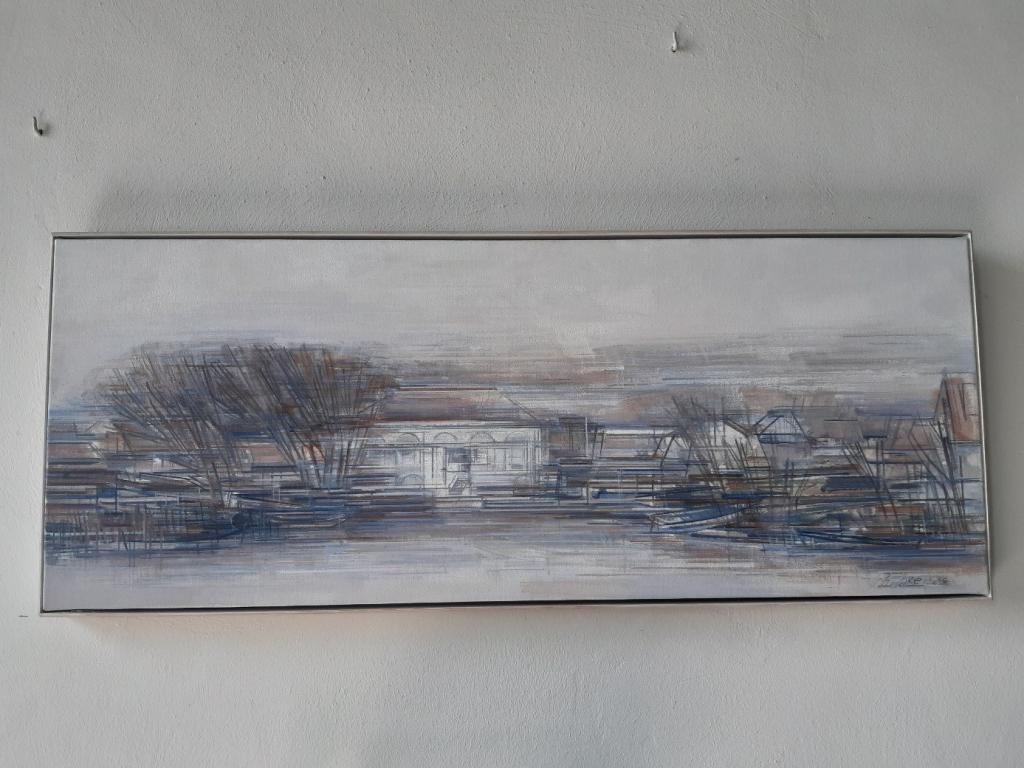
Meldijk Uitgeest pumping station
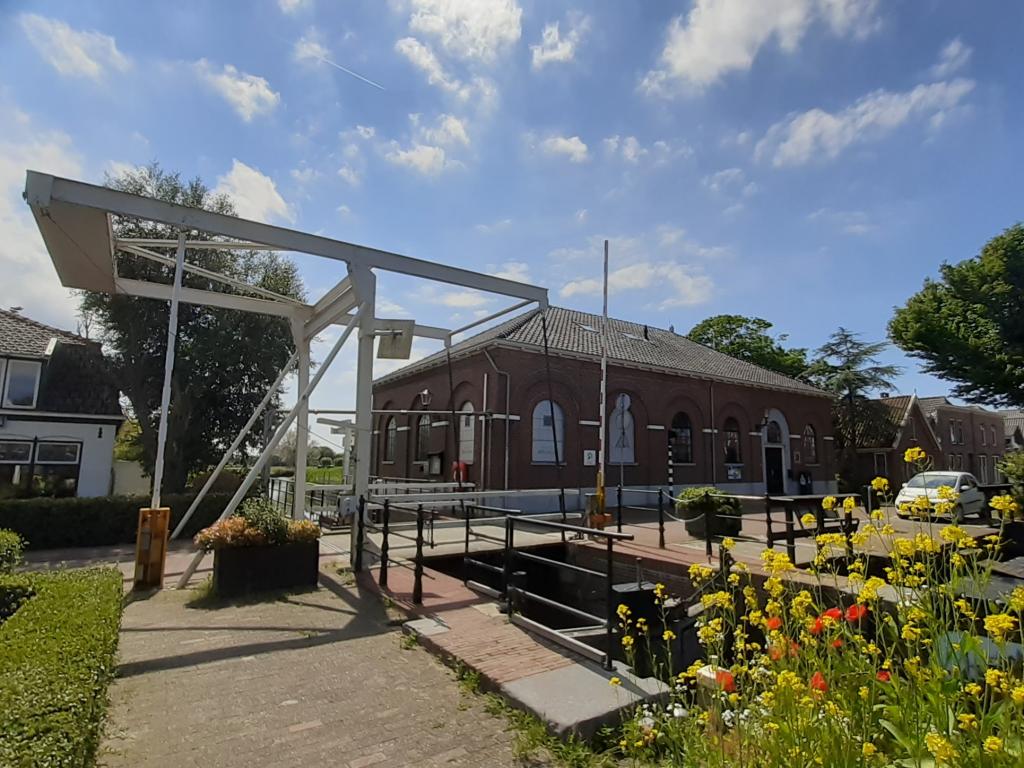
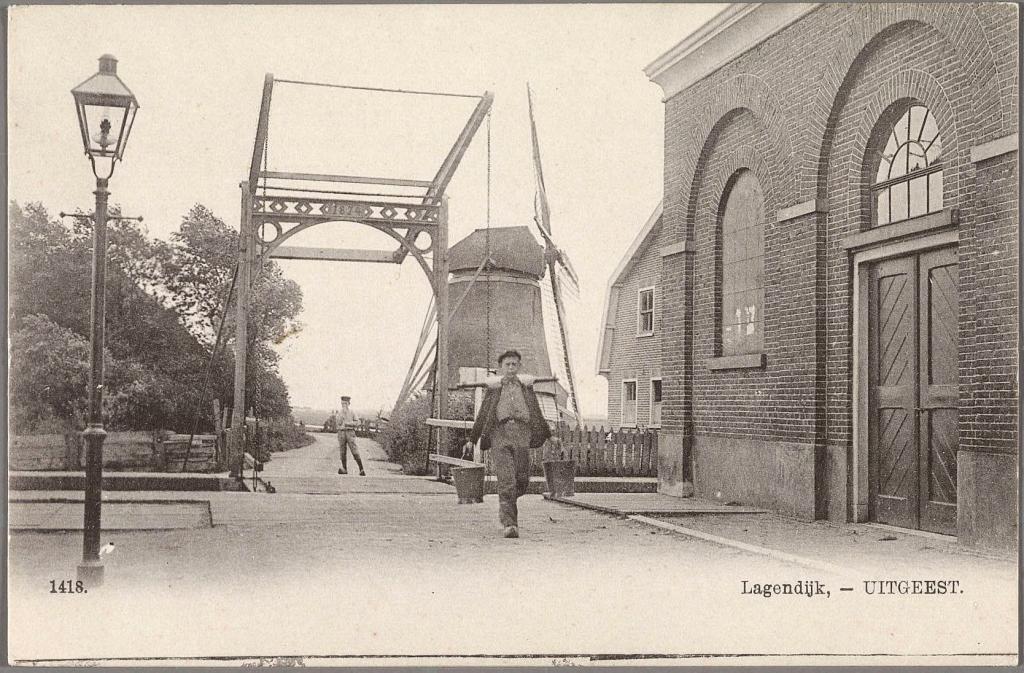
Together with the lock and the bascule bridge, the Meldijk pumping station forms a beautiful and well-preserved complex in the middle of the densely built-up area of Uitgeest. The text 'Gemaal Meldijk' (Meldijk pumping station) is written in red roof tiles on the roof. The right-hand side of the pumping station currently houses a painting school.
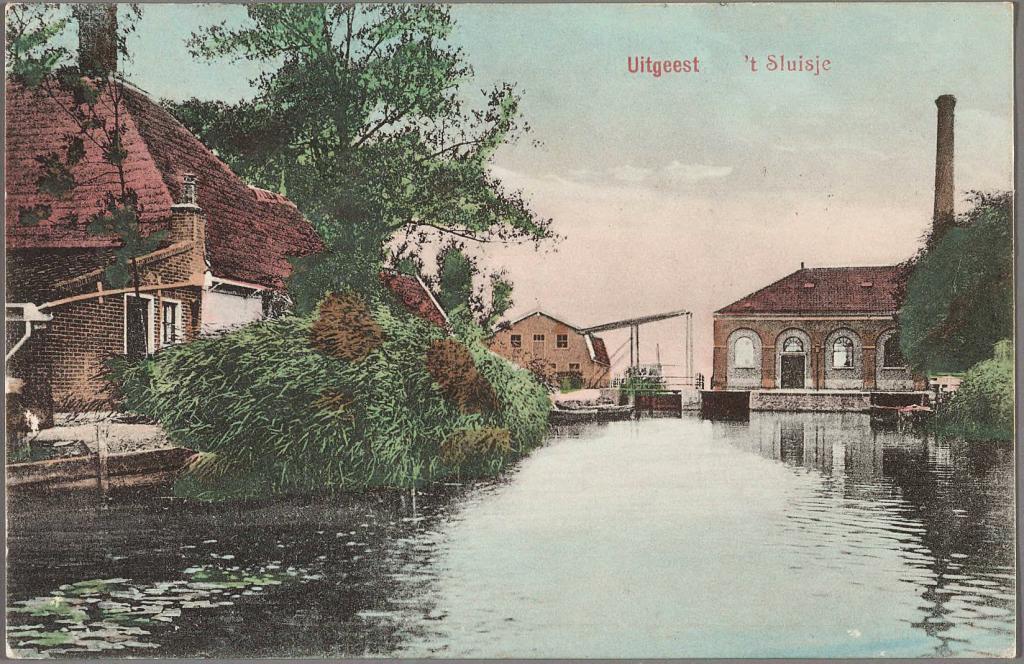
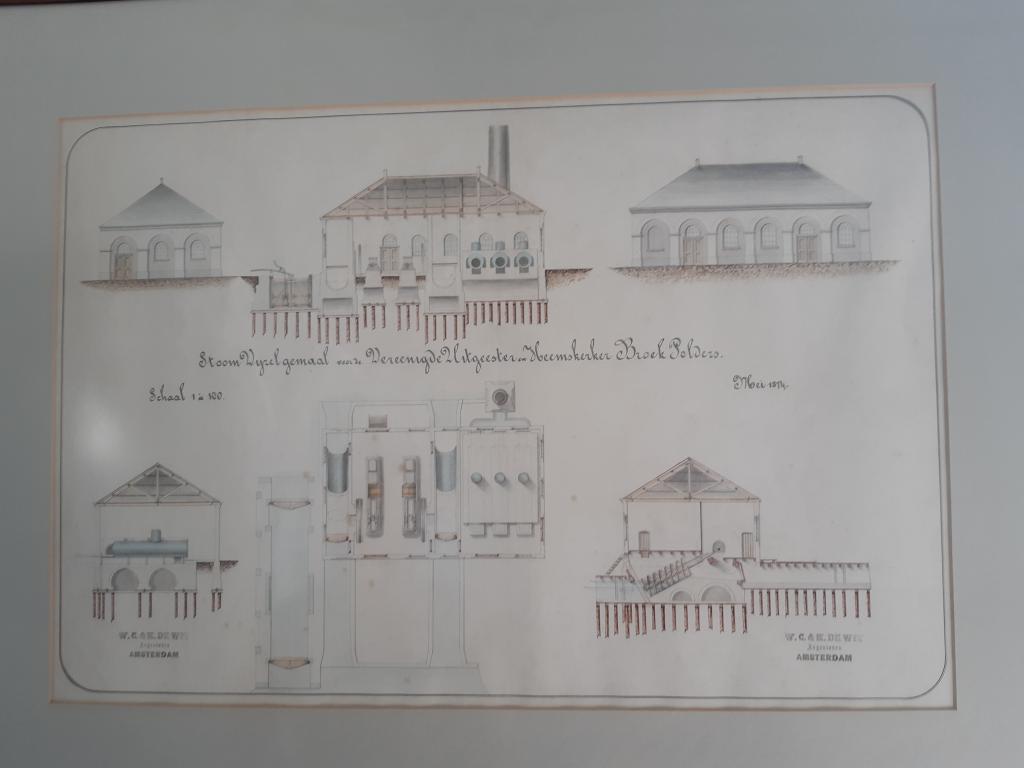
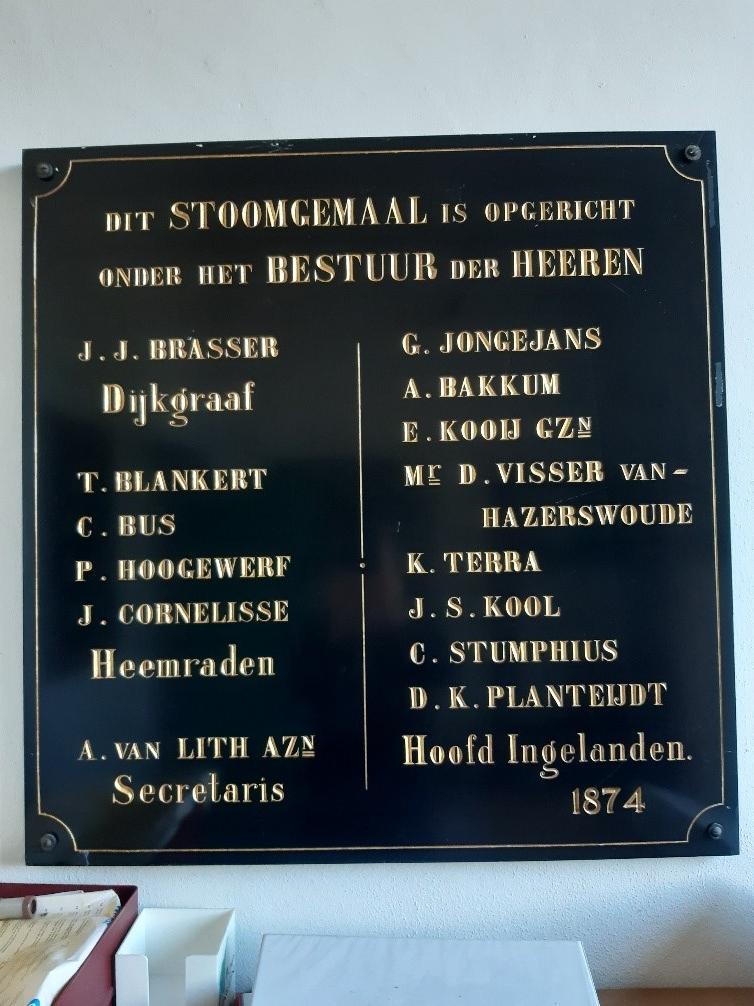
In 1874, the pumping station on Meldijk was put into operation as a steam pumping station. The pumping station pumps water from the Uitgeester and Heemskerkerbroek polders into the Uitgeestermeer lake. The pumping station is desperately needed, because a lot of water flows from the south to Uitgeest. The installation consisted of two steam engines with boilers, each driving a wooden screw pump with a diameter of 1.80 m and a capacity of approximately 80 m³ per minute. The chimney and coal shed were located at the rear.
The design for the pumping station was created by W.C. and K. de Wit, an engineering firm from Amsterdam. The pumping station is a relatively rare type because the double installation and boiler room are located in a single building.
From steam to electricity
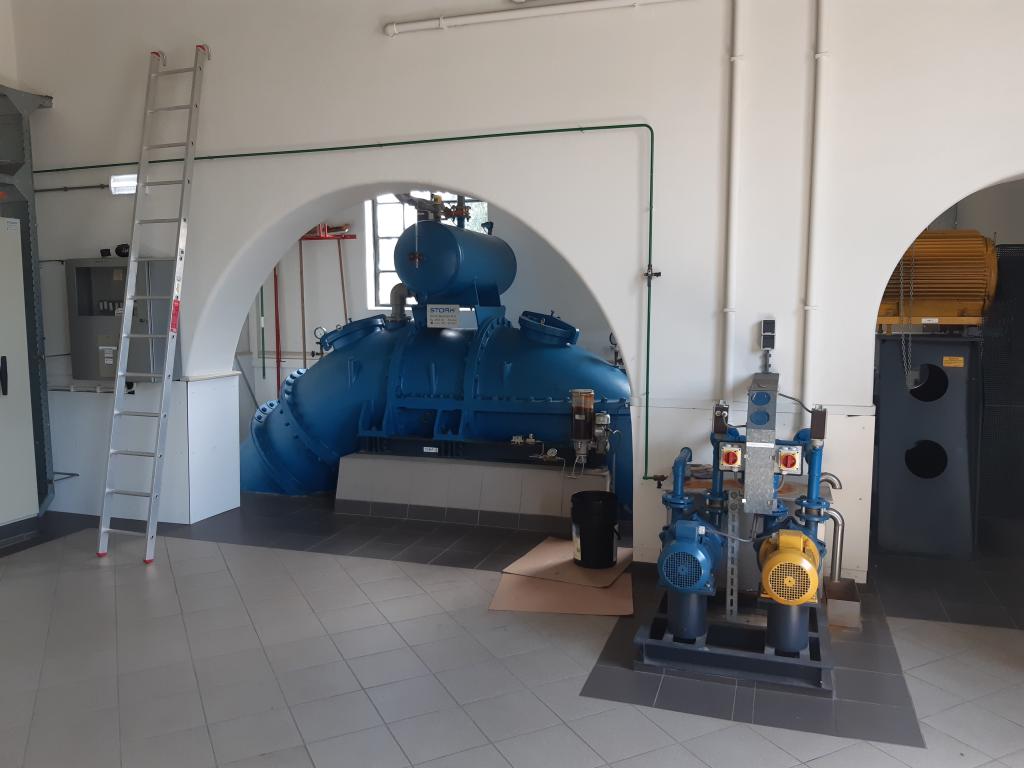
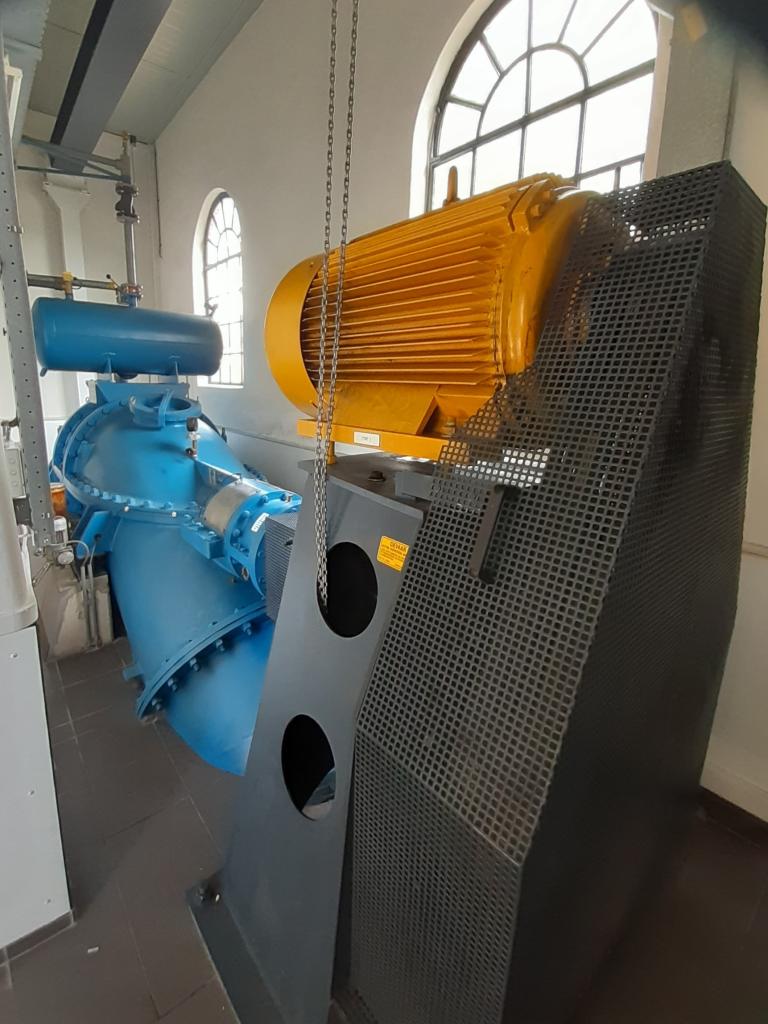
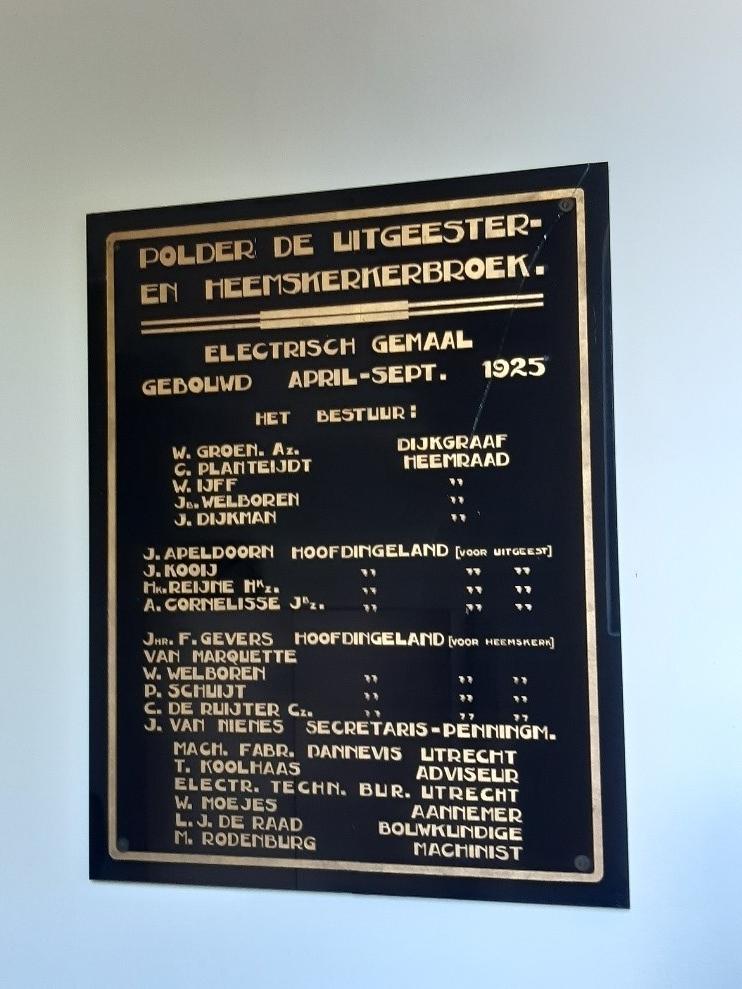
In 1925, the pumping station was converted into an electric pumping station. The screw pumps were replaced by two horizontal screw pumps manufactured by Pannevis, each driven by an electric motor and installed in the screw pump channels. The total cost of the operation was 54,500 guilders. The official trial pumping took place on August 31, 1925. It is likely that the left front door was also removed at that time. The space behind the former door now houses the high-voltage room. The redundant chimney and coal shed were demolished.
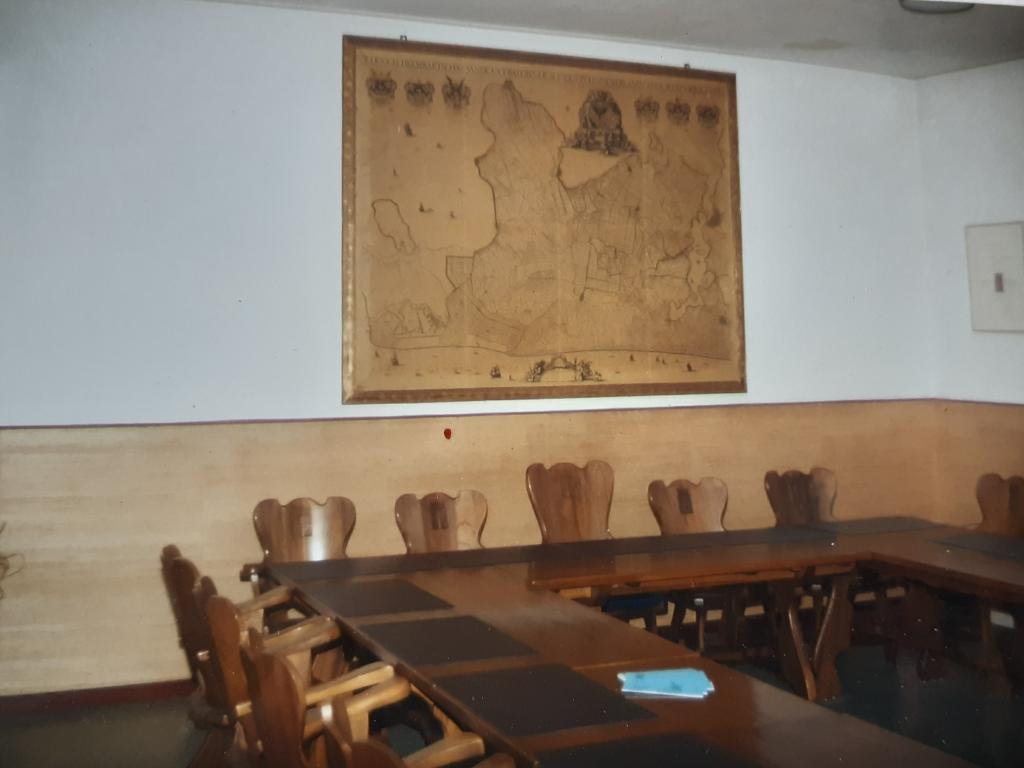
The former boiler room, on the right side of the building, was initially used as a meeting room for the polder board and as a storage room. Today, it serves as a studio. The function of the machine room has remained unchanged.
Four memorial stones
There are four black memorial stones with gold lettering in the pumping station. Two stones date from 1874 and commemorate the establishment of the steam pumping station. The third stone, from 1925, refers to the electrification of the pumping station. The last stone dates from 1997. In that year, the pumping station was renovated by the then Water Board Het Lange Rond, into which the Uitgeester- and Heemskerkerbroek polders had merged in 1977. The two horizontal screw pumps and the associated suction nozzles were renewed, the pumping station was fitted with an electric duckweed screen, and the operation was fully automated.
Surroundings
To the east of the pumping station is a small lock with two pairs of pointed gates. It dates from 1641 and was renovated in 1874. The lock was built in brick, but in 1953 it was fitted with concrete lock walls and an inner lock head. The wooden doors were replaced in 2010. This lock allows boats to bridge the difference in water level between the polder and the Uitgeestermeer. The lock also functions as a fish migration route.
Above the lock is a white drawbridge. This was also renovated in 1874 and replaced by a steel drawbridge in 1954. To the west of the pumping station is the engineer's house, built in 1879.
Extra
- https://www.route.nl/poi/933447/gemaal-meldijk
- http://www.kanoroutes.nl/nl-uitgeest.htm
- https://www.alkmaarder-enuitgeestermeer.nl/activiteiten/102
- https://www.oerij.eu/downloads/user/pdf/waterroute-uitgeest.pdf