
The grave of dike reeve De Geus
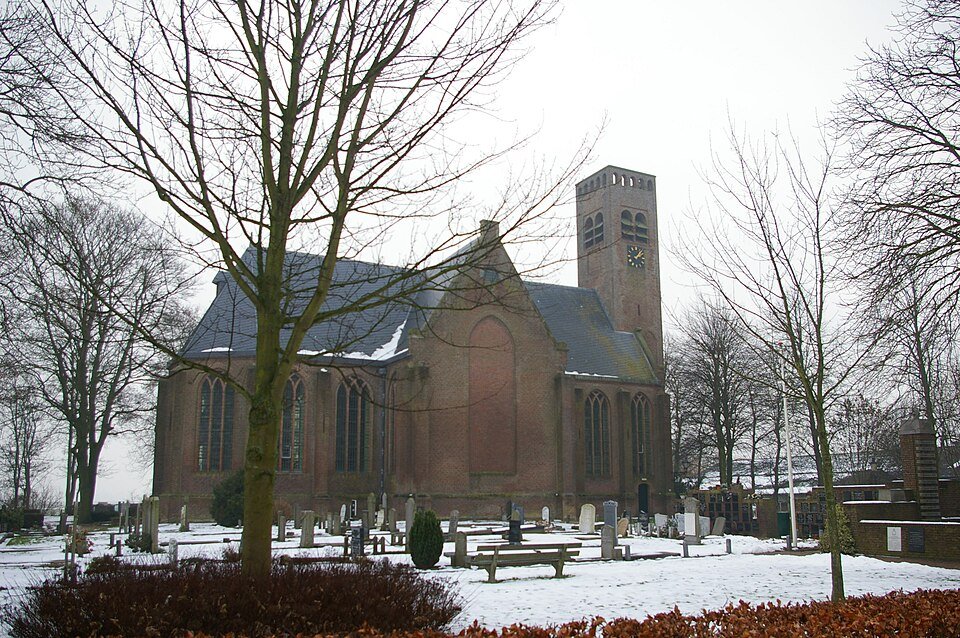
There is a special grave in the cemetery surrounding the church of Stompetoren in Schermer. Three people are buried here, including Willem de Geus (1810-1887), dike reeve of the Schermeer Water Board. The grave is owned by the Hollands Noorderkwartier Water Board (HHNK). Who exactly was Willem de Geus? And how did the water board come to own this special property?
Willem de Geus
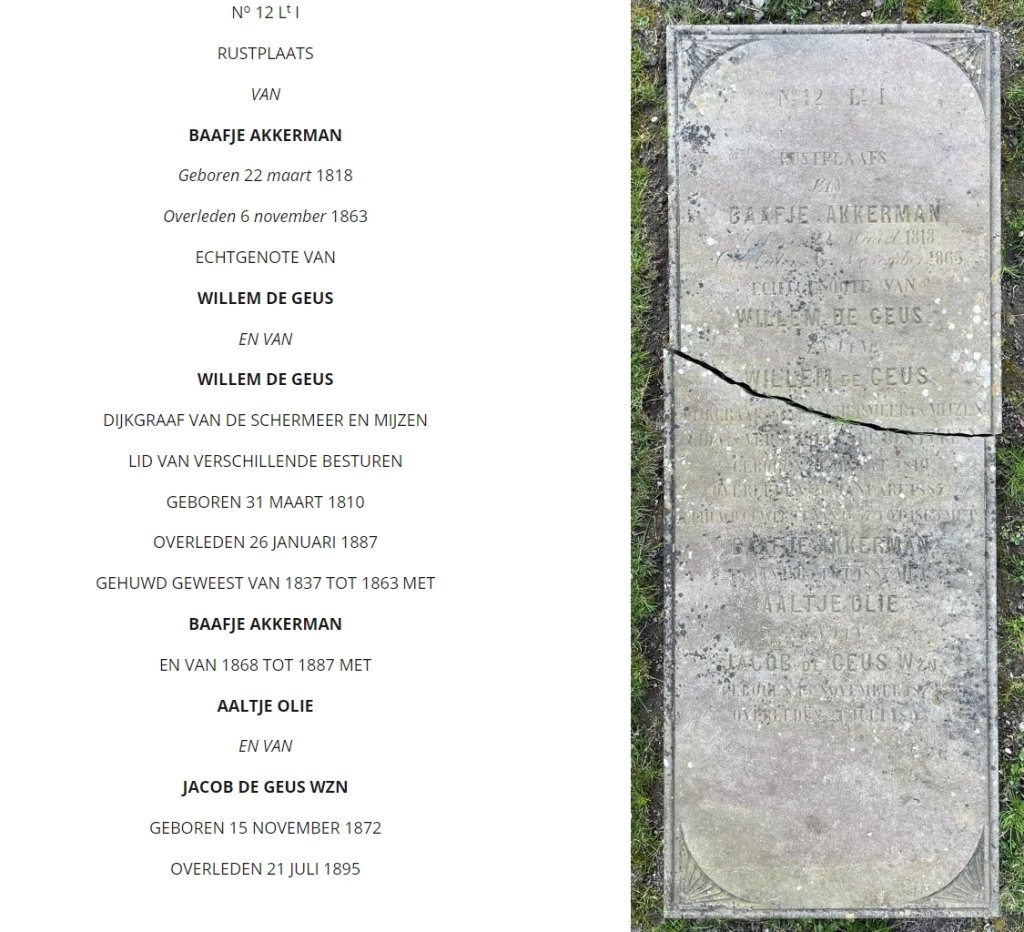
The first body to be laid to rest in the grave was that of Baafje Akkerman (1818-1863). She was the first wife of Willem de Geus. He himself was also buried here, followed in 1895 by Jacob de Geus Wz. (1872-1895). Jacob was a son born from Willem de Geus' second marriage to Aaltje Olie. Willem became dike reeve of the Schermer in 1874 and held this office until his death. He was also dike reeve of the Mijzenpolder between Schermerhorn, Rustenburg, and Ursem and chief member of the Uitwaterende Sluizen Water Board. This entire story is neatly carved into the heavy bluestone tombstone:
Farm dike count
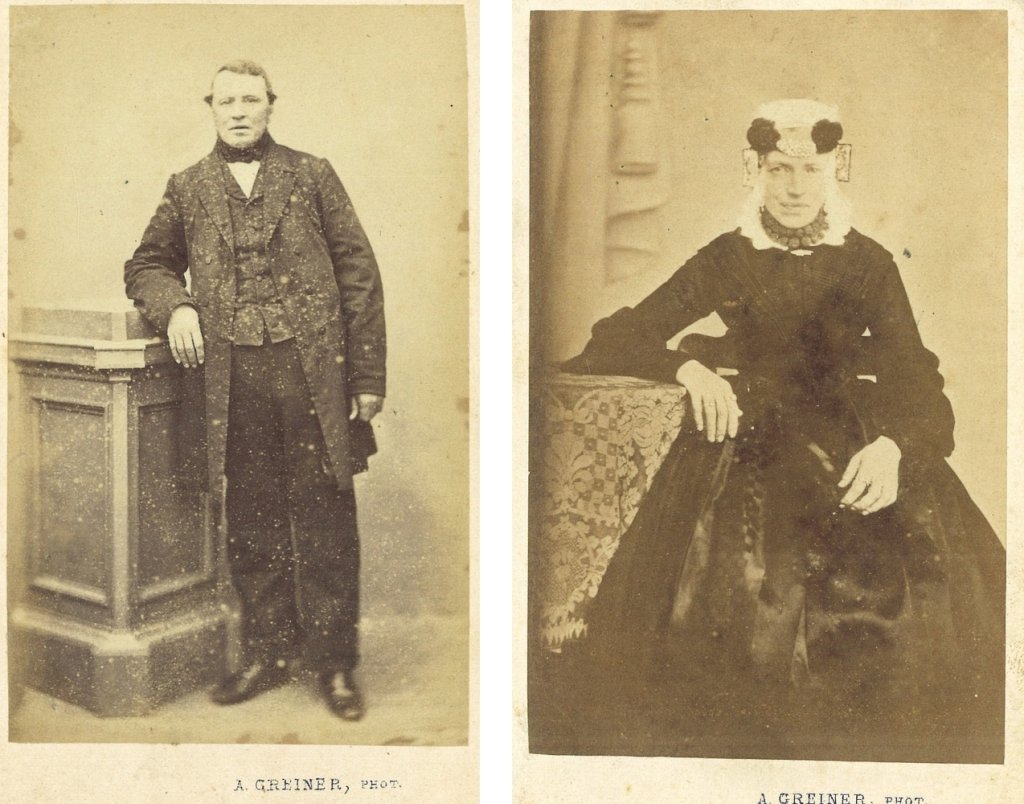
De Geus was a prominent farmer with authority in the polder. He won several prizes at exhibitions with his livestock. In 1874, he was appointed the first farmer dike reeve of the Schermer. Until his appointment, this position had always been held by large landowners from Alkmaar. After his appointment, De Geus received so many congratulations that he was unable to thank everyone personally. He therefore did so in an advertisement on the front page of the Alkmaarsche Courant on November 1, 1874. As dike reeve, De Geus was involved in a long and sometimes heated debate about the construction of steam pumping stations. All other large polders in the neighbourhood the Beemster and the Heerhugowaard, partially switched to steam in the 1870s. In the Schermer, however, the windmill drainage system generally functioned well. In addition, the board was in the process of replacing the scoop wheels in the windmills with more efficient screw pumps, and the construction and operation of a steam pumping station was extremely costly. The latter weighed heavily on De Geus. He stated: "A thing is not good just because it requires high costs." The screw pump program was continued, and with each modernized mill, the proponents of steam power lost some of their momentum. Thus, the Schermer continued to rely on windmill drainage and wind power. It was not until 1925 that the polder decided to switch to modern electric pumping stations.
Perpetual right
Dijkgraaf De Geus is therefore not just anyone. But how did the water board come to acquire grave no. I 0012 in the cemetery near the church in Stompetoren? That is thanks to Jacob Posch, a successor to De Geus. Posch became dike reeve of Schermer in 1945 and was also mayor of Oterleek, of which Stompetoren was a part. The grave of his predecessor De Geus was apparently close to his heart. Less than a week before his resignation as mayor on May 1, 1965, he arranged for the Schermeer Water Board to take over the grave, or rather the exclusive and perpetual right to bury bodies there. The polder immediately purchased the maintenance, again in perpetuity. Together, this amounted to 400 guilders. The Schermeer Water Board merged with the Lange Rond Water Board in 1977. The latter in turn merged with HHNK in 2003, and since then this water board has been the owner of the grave. The municipality of Alkmaar, which now includes Stompetoren, has designated it as a 'special grave'. The water board is currently considering restoring the gravestone, which has unfortunately been broken.
Extra
De Schermer is part of the Land van Leeghwater. There is plenty to see and do within this area. In addition, 2025 will mark the450th anniversary of the birth of the renowned mill and polder expert Jan Adriaensz. Leeghwater (1575-1650). For more information, see www.inalkmaar.nl/bezoeken/ontdek/land-van-leeghwater, , andwww.inalkmaar.nl/leeghwater-450.
The cemetery in Stompetoren is freely accessible. The church was transferred to the COUP Group in July 2024. For information about the activities and opportunities organized there, seewww.kerkstompetoren.nl.